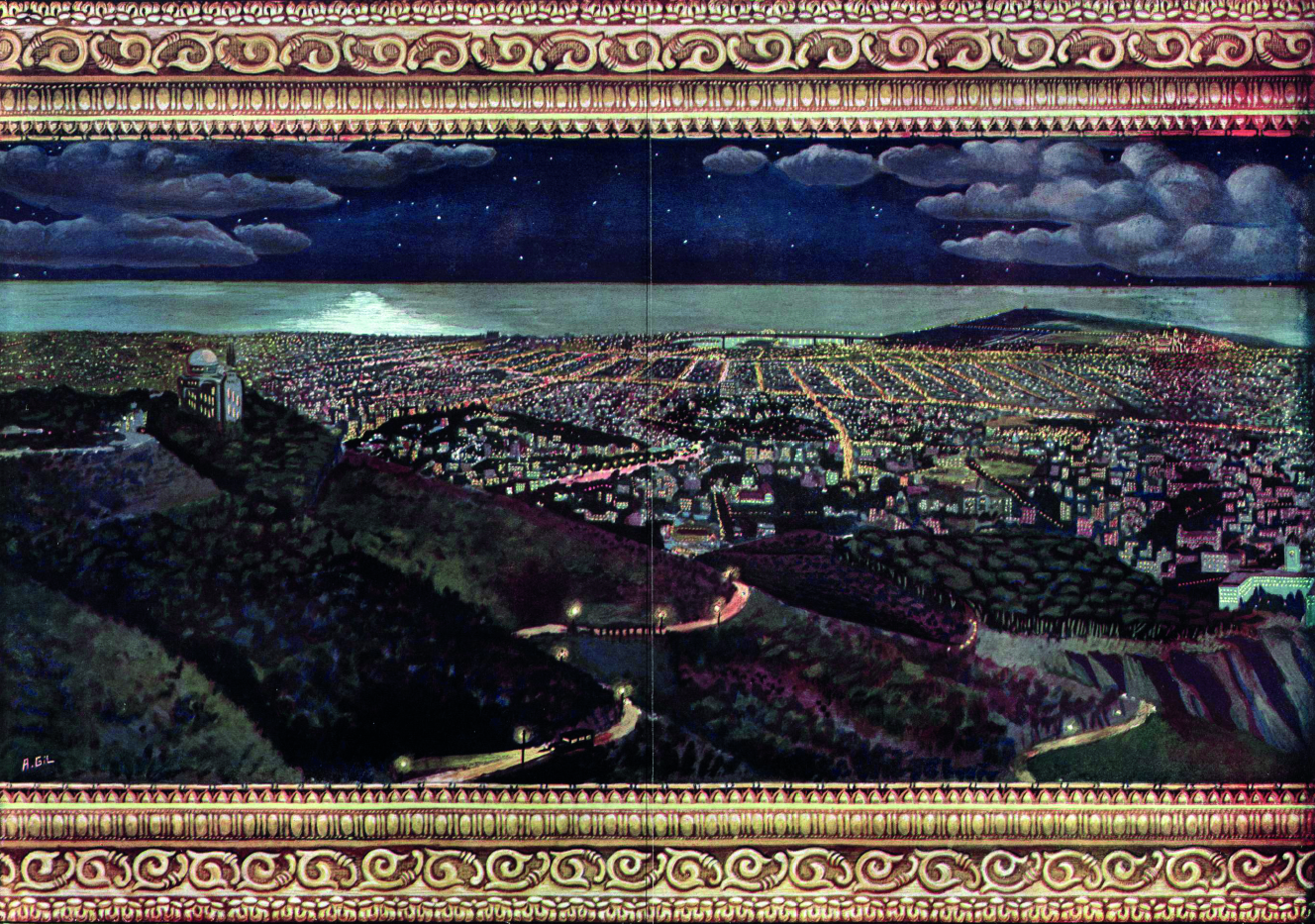
The route proposed here takes as its starting point a panoramic image of the city. It corresponds to the central commemorative plate in issue 3 of La Ilustración Iberoamericana, “Barcelona in 1930, seen from Tibidabo, in one of its incomparable autumns.” From above, the twilight seems to blur the contours of the city’s architecture. However, far from this possible confusion, the emergence of the GATCPAC avant-garde transformed this immense panorama into a diorama in which the radicalism of language and abstraction was measured as a hymn to the epiphany of modern times.
The proclamation did not go down too well in some of the architectural circles closest to Noucentisme; the extent to which the official culture of power can become reactionary is a question we have become accustomed to in recent times. Barcelona during the Second Republic (1931-1937) was no exception: from Nicolau Maria Rubió i Tudurí, Pere Benavent, Raimon Raventós and Adolf Florensa, to name just a few of the architects who offered the mask of classical language or traditional technique as redemption against those who apparently renounced the past and order.
This itinerary offered to visitors to the city does not deal with good or bad. Some members of GATCPAC took it upon themselves to highlight this drama: how could someone, in 1935, create such contrasting buildings as Espona House in the Eixample district and its namesake on Carrer Aribau? How should we interpret the opposition to the ideas of GATCPAC by the author of ACTAR and Ràdio Barcelona station? Where do we place the fenêtre en longueur of the Barraquer clinic, designed by someone who was never at the forefront of the avant-garde? Or, to conclude, for whom and by whom was the vision of the “future Barcelona” perpetuated on Via Laietana?
 8
8