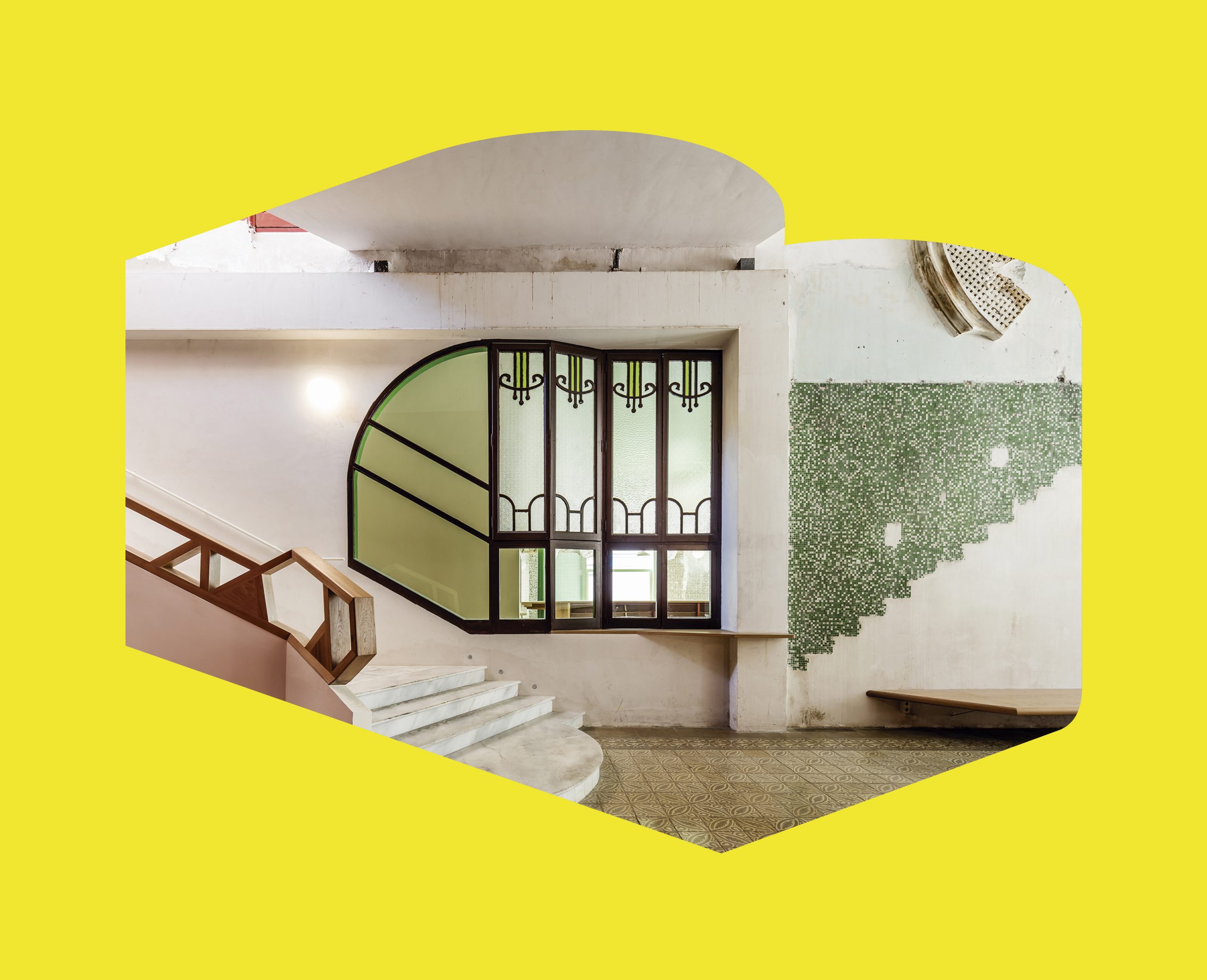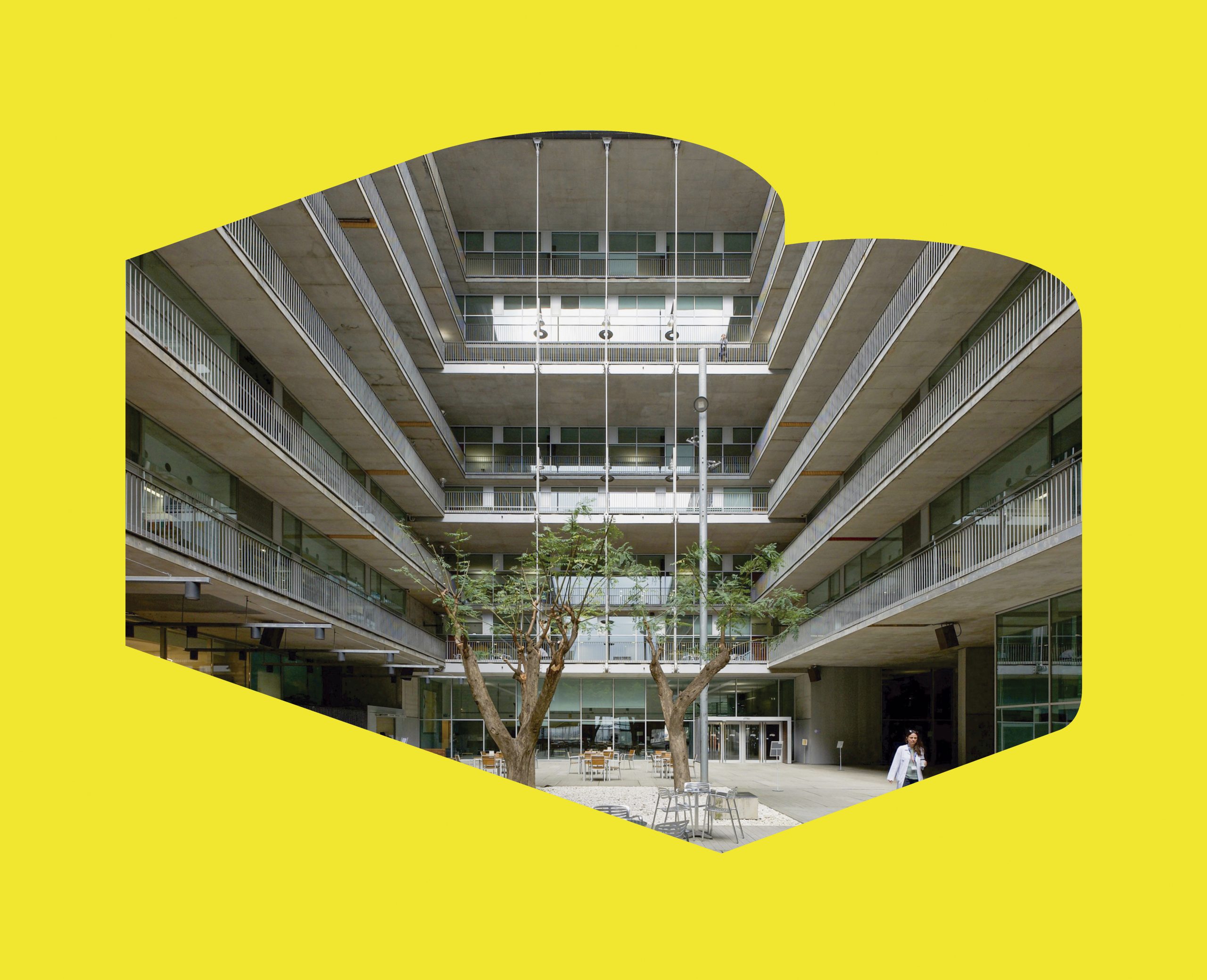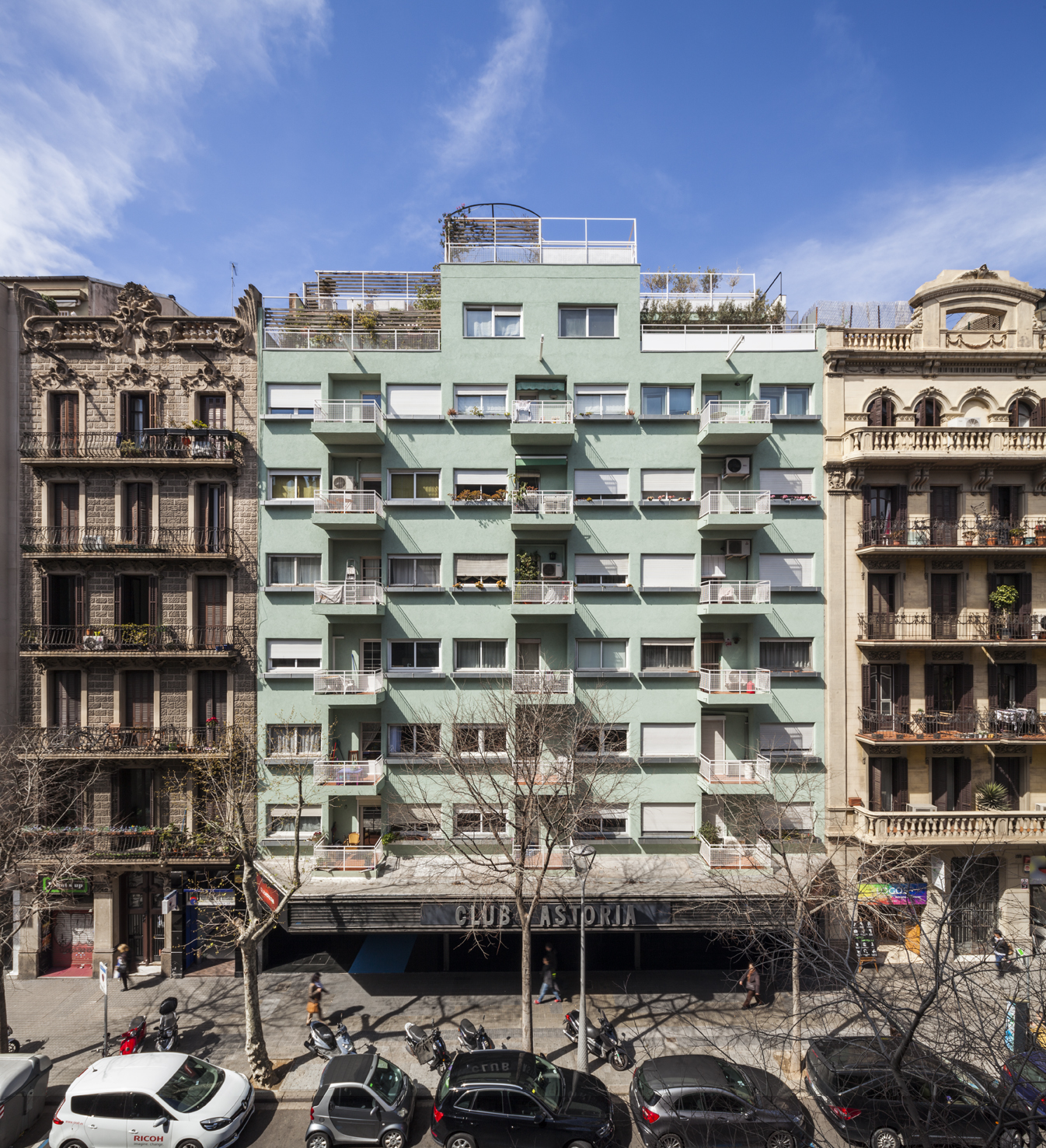
We usually associate Rationalism with the orthodoxy of GATCPAC, an unavoidable reference point for local modernity. But beyond radicalism, black and white, we find a range of greys where we can include other architectures that, with varying degrees of intensity and with different references and aspirations, applied the precepts of avant-garde architecture. With influences that always came from experiments beyond the Pyrenees, we can say that there are many examples that already point to a definitive overcoming of Modernism or Noucentisme, or that, little by little, are becoming a phase of its metamorphosis. And many of these approaches predate the presentation of the GATCPAC to society in April 1929.
Except for the very striking building at the intersection of Carrer d’Enric Granados and Carrer París, there is a curious lack of noteworthy rationalist architecture in a neighbourhood as large as Eixample Esquerre, where Josep Lluís Sert‘s first work showcases the techniques he learned in Le Corbusier‘s studio. It is on the outskirts of this neighbourhood that we find the more or less successful examples that will guide this itinerary: in Les Corts, around Plaça d’Espanya, and also in the Raval, where rationalism left such notable examples as the iconic Dispensari Antituberculós (Anti-Tuberculosis Dispensary), whose umpteenth use and adaptation is still being debated today, showing all the changes that have taken place over the last century.
On this itinerary, a unique case illustrates the tensions between the birth of modern language and the very present drive for decorative arts: the Josep Masana I and II houses. By the same architect, in the same years and on adjacent plots, we will see an example of rationalism that comes from a certain Central European expressionism and, side by side, its twin with all the rhetoric of pure Art Deco. All of this is paradigmatic of the era when everything was beginning to take shape.
 4
4