Jeroni Moner Codina is an essential figure in contemporary Banyoles, the city where he built most of his work. Although born in Barcelona, his family roots in Banyoles and his passion for water polo —practised at Club Natació Banyoles— led him to settle permanently in the city in 1971.
His early works, such as the three-dwelling building on Carrer de la Rambla (1970), the Vilanova-Cullell House (1971) —both with Albert Illescas— the Masgrau-Juanola House (1972), the Agustí-Soler House (1975), and Muebles Tarradas (1975), are framed within the artistic conceptualism that permeated Banyoles during the final years of Francoism.
At that time, the capital of the Pla de l’Estany region consolidated its position as a nationally recognised cultural hub thanks to the multidisciplinary collectives Tint-1 (1971–1973) and Tint-2 (1974–1976). These groups, made up of sculptors, painters, designers, architects and intellectuals, promoted a creative renewal that would shape the Catalan cultural scene of the period, with Moner as a key figure.
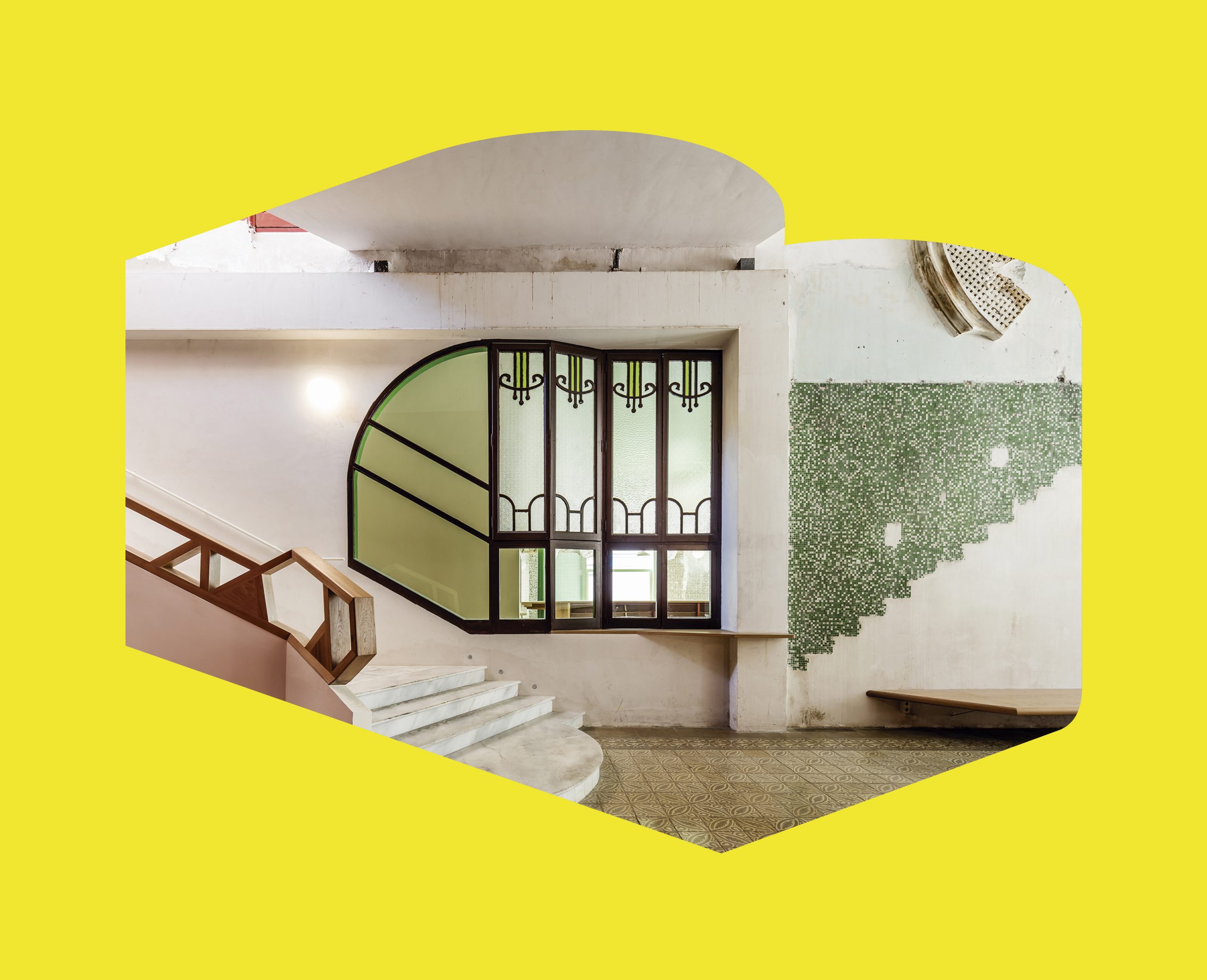
The rehabilitation of the Tint dels Paraires (1971), which gave its name to the collectives and provided their exhibition framework, marks the beginning of Jeroni Moner’s extensive work in architectural heritage intervention. In this body of work, the symbiosis between the existing fabric and transformation is very often established through the introduction of industrialised structures, drawing on conceptual rigour and formal boldness. Among his most notable projects are the rehabilitation of the Pia Almoina in Girona (1976), with Benet Cervera and Arcadi Pla; the installation of the altarpiece of Santa Maria de l’Escala in the monastery of Sant Esteve de Banyoles (1983); the restoration of the bell tower of the monastery of Sant Miquel de Fluvià (1991); his own residence; Can Bombeta (1992); and the Municipal Centre for Musical Studies of Banyoles (2001).
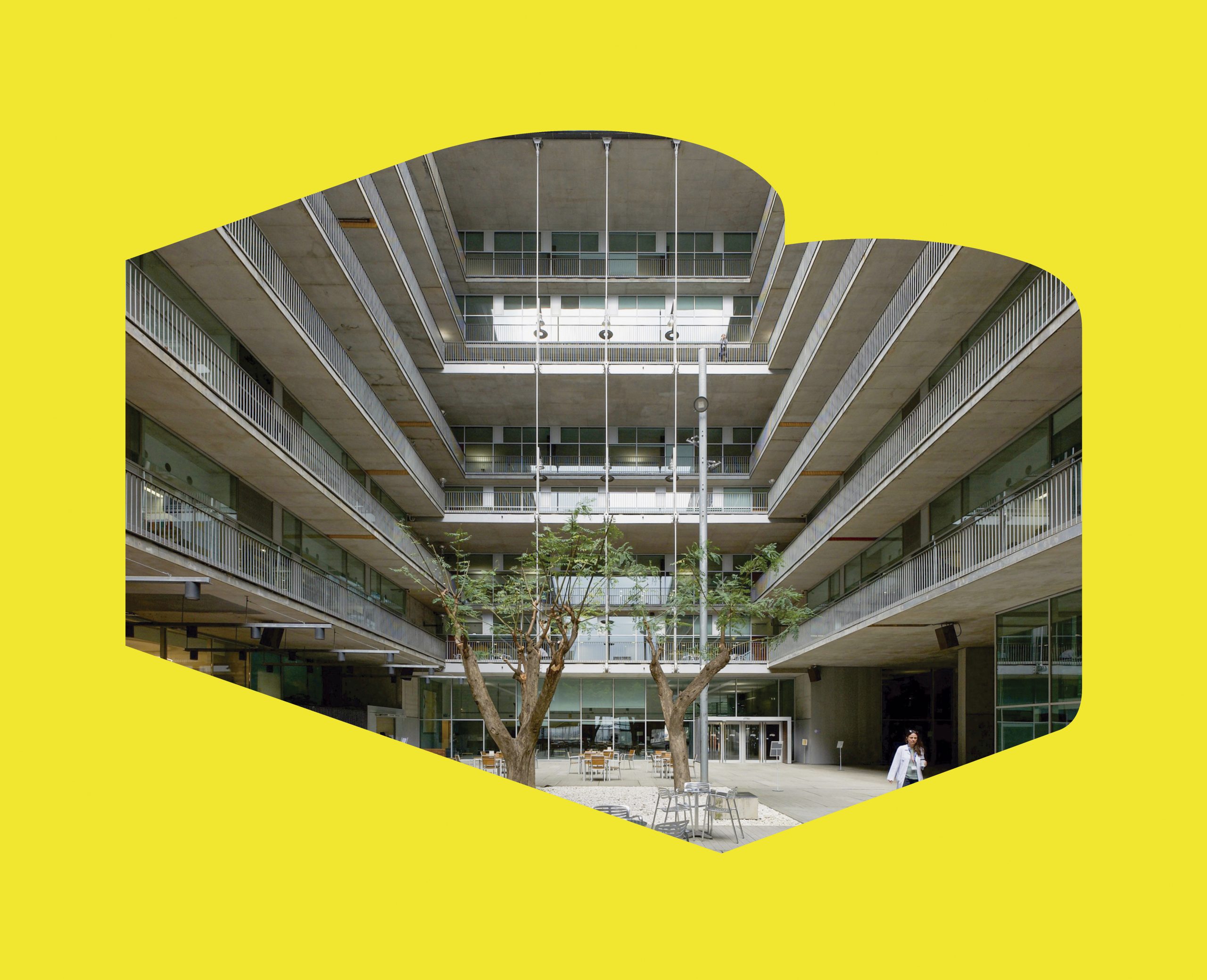
Following the cultural effervescence of the 1970s, in 1985 Moner, together with the architect Josep Riera, the biologist Carles Abellà and the economist Tomàs Garrofé, drafted the urban, economic and landscape studies that enabled Banyoles to be designated as the venue for the rowing events of the Barcelona 1992 Olympic Games. This period linked Moner to the major transformation experienced by the city in the early 1990s, through projects such as the special plan for the eastern sector of the lake (Estany), the upgrading of the lake’s urban edge —selected for the FAD Awards— and the reconstruction of the Malagelada and Guardiola ‘pesqueres’ (traditional lakeside pavilions), with Josep Riera and Joaquim Figa (1991), as well as the office building and Municipal Theatre, with Lluís Pau (1994).
Moner’s commitment to Banyoles, however, was not limited to his work as an architect. Through journalistic activism —publishing numerous articles in local magazines— and through his presidency of the Centre for Regional Studies of the Pla de l’Estany (1994–2011), he continued to contribute to the shaping of the city and to the preservation and dissemination of its natural and cultural heritage.