Intro

About

In this first stage, the catalogue focuses on the modern and contemporary architecture designed and built between 1832 –year of construction of the first industrial chimney in Barcelona that we establish as the beginning of modernity– until today.

The project is born to make the architecture more accessible both to professionals and to the citizens through a website that is going to be updated and extended. Contemporary works of greater general interest will be incorporated, always with a necessary historical perspective, while gradually adding works from our past, with the ambitious objective of understanding a greater documented period.

The collection feeds from multiple sources, mainly from the generosity of architectural and photographic studios, as well as the large amount of excellent historical and reference editorial projects, such as architectural guides, magazines, monographs and other publications. It also takes into consideration all the reference sources from the various branches and associated entities with the COAC and other collaborating entities related to the architectural and design fields, in its maximum spectrum.

Special mention should be made of the incorporation of vast documentation from the COAC Historical Archive which, thanks to its documental richness, provides a large amount of valuable –and in some cases unpublished– graphic documentation.

The rigour and criteria for selection of the works has been stablished by a Documental Commission, formed by the COAC’s Culture Spokesperson, the director of the COAC Historical Archive, the directors of the COAC Digital Archive, and professionals and other external experts from all the territorial sections that look after to offer a transversal view of the current and past architectural landscape around the territory.

The determination of this project is to become the largest digital collection about Catalan architecture; a key tool of exemplar information and documentation about architecture, which turns into a local and international referent, for the way to explain and show the architectural heritage of a territory.

Aureli Mora i Omar Ornaque
Directors arquitecturacatalana.cat

credits

About us

Project by:

Created by:

Directors:

2019-2026 Aureli Mora i Omar Ornaque

Documental Commission:

2019-2026 Ramon Faura Carolina B. Garcia Eduard Callís Francesc Rafat Pau Albert Antoni López Daufí Joan Falgueras Mercè Bosch Jaume Farreny Anton Pàmies Juan Manuel Zaguirre Josep Ferrando Gemma Ferré Inés de Rivera Fernando Marzá Moisés Puente Aureli Mora Omar Ornaque

Collaborators:

2019-2026 Lluis Andreu Sergi Ballester Marianela Pla Maria Jesús Quintero Lucía M. Villodres Montse Viu

External Collaborators:

2019-2026 Helena Cepeda Inès Martinel

With the support of:

Generalitat de Catalunya. Departament de Cultura

Collaborating Entities:

ArquinFAD


Fundació Mies van der Rohe


Fundación DOCOMOMO Ibérico


Basílica de la Sagrada Família


Museu del Disseny de Barcelona


Fomento


AMB


EINA Centre Universitari de Disseny i Art de Barcelona


IEFC


Fundació Domènench Montaner.


ETSAB

Design & Development:

edittio Nubilum

Rationalism in Barcelona: La Dreta de l’Eixample

  • Mig dia 

We usually associate Rationalism with the orthodoxy of GATCPAC, an essential reference point for local modernity. But beyond radicalism, black and white, we find a range of greys where we can include other architectures that, with varying degrees of intensity and with different references and aspirations, applied the precepts of avant-garde architecture. With influences that always came from experiments beyond the Pyrenees, we can say that there are many examples that already point to a definitive overcoming of Modernism or Noucentisme, or that, little by little, are becoming a phase of its metamorphosis. And many of these approaches predate the presentation of GATCPAC to society in April 1929.

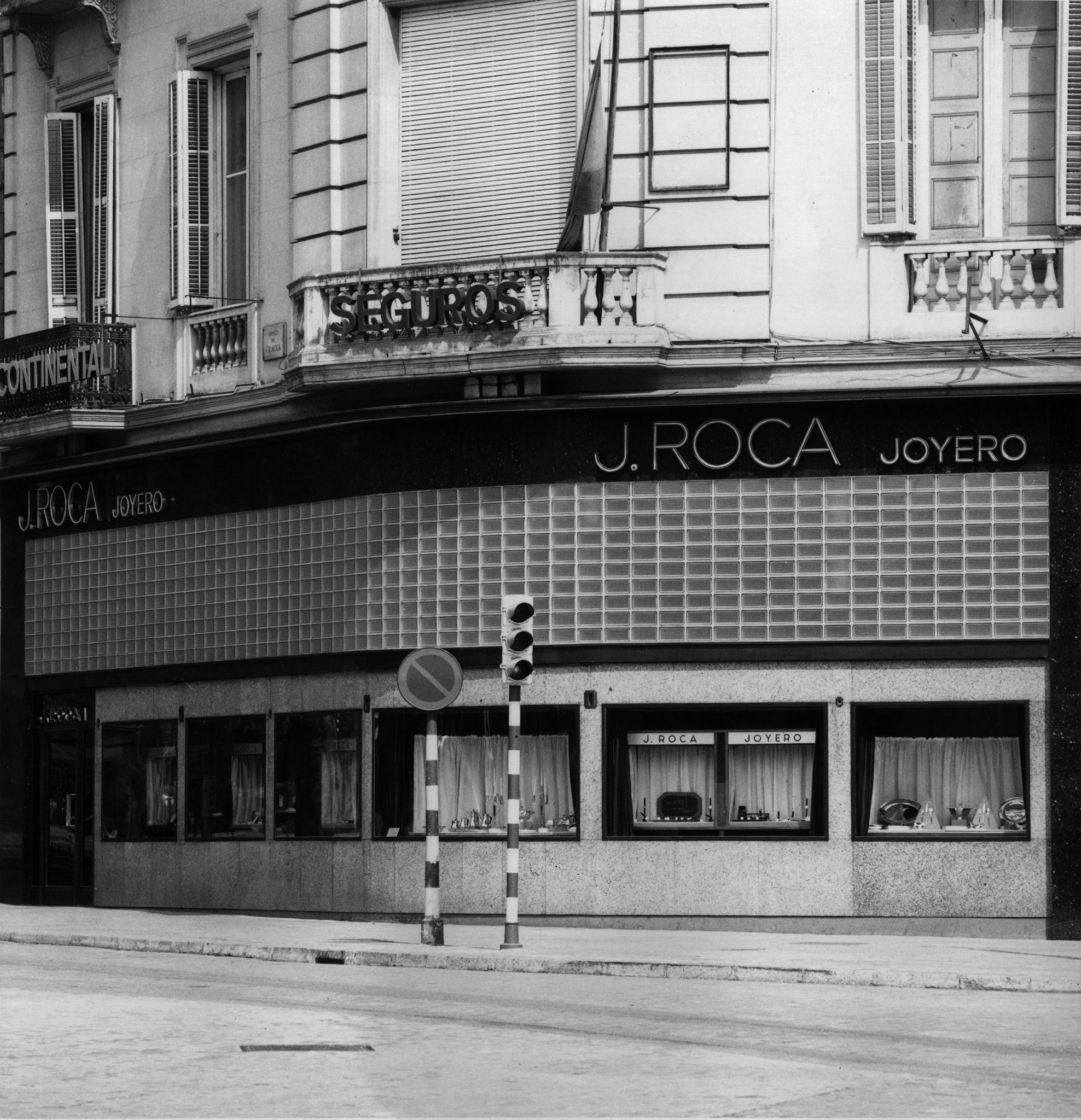
During this period, Eixample Dret, especially in the vicinity of Passeig de Gràcia, began to be a fairly consolidated and built-up area of Pla Cerdà, where construction had long since won out over the street layout. However, some vacant lots would still bear the mark of rationalist architecture, with some heterodox variations that flirted with other trends. This is the case of facilities such as the Myrurgia factory, the Roca Barallat housing complex, and the Casal Sant Jordi, with touches of Art Deco and Noucentisme. These contrast with examples of immaculate rationalism, such as the Casa Mercè Ymbern de Cardenal.

This tension, in those years, was evident in the different values defended by the orthodox members of GATCPAC and the members of FAD, who were favourable—as the name of the association indicates—to the decorative arts. Despite their apparent opposition, everything eventually blended together. Without going any further, one need only observe the details of the interior spaces of many purist GATCPAC buildings to realise that, in the end, it was all a dialogue that sought to look forward.

Tornar
Si no visioneu el mapa reviseu el vostre consentiment de cookies fent click aquí

Autors (13)