It is no coincidence that Picasso donated a significant part of his private collection to the city of Barcelona in 1970, in memory of his ‘unforgettable friend, Jaime Sabartés.’ These works are still on display today at the Museu Picasso in Barcelona.
The artist’s intense and close connection with the city dates back to 1895, when Pablo Ruiz Picasso – aged thirteen – and his family arrived in Barcelona from Málaga, where they lived in various locations around the city’s old port, including the houses in Xifré and Plaça de la Mercè, in a building that was demolished during the Ciutat Vella redevelopment process, creating the square.
The various locations of the Ruiz Picasso residences are situated around Port Vell, perhaps to remain close to the same sea that bathes the coast of Málaga, perhaps because of their proximity to the Llotja de Mar: the Gothic civil building that then housed the Barcelona School of Arts and Crafts, where his father taught and where he himself was a student, as well as the Catalan Academy of Fine Arts of Sant Jordi, which he would frequent as a student.
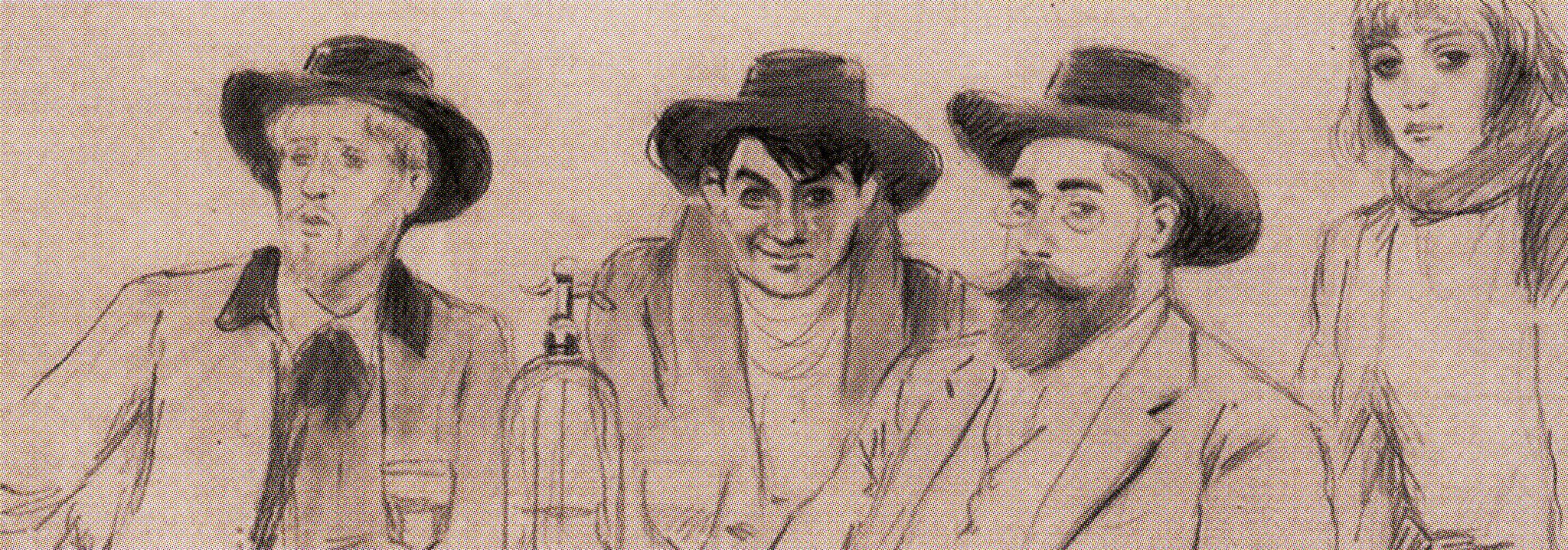
He was also a regular visitor to Barcelona, exhibiting at Els Quatre Gats, on the ground floor of Josep Puig i Cadafalch‘s Casa Martí, where he discovered the bohemian and cultural elite of the time; artists and writers with whom he would form great lifelong friendships, such as Sabartés, and gain his first insight into Paris, where artists such as Casas, Rusiñol and Utrillo came and went to take the pulse of the avant-garde of the moment. With Sabartés and others, he also frequented the Sala Parés gallery—where he would also exhibit his work—after buying a cake at the bakeries on Carrer de Petritxol every Sunday.
In a more contemporary period, with Picasso now settled in Paris as one of the most renowned artists of the 20th century, and with his relationship with Barcelona severed by the Spanish Civil War and Franco’s dictatorship, the artist was commissioned by the COAC to create, in collaboration with the sculptor Carl Nesjar, the murals and friezes for the building in Plaça Nova, a gift from the artist and the institution to the city.
Barcelona, for its part, on the occasion of the centenary of Picasso’s birth, will pay tribute to this intermittent but close relationship between the artist and the city in various ways, including this route, which highlights the monument Homenatge a Picasso (Tribute to Picasso) by Antoni Tàpies, from 1983.
 4
4