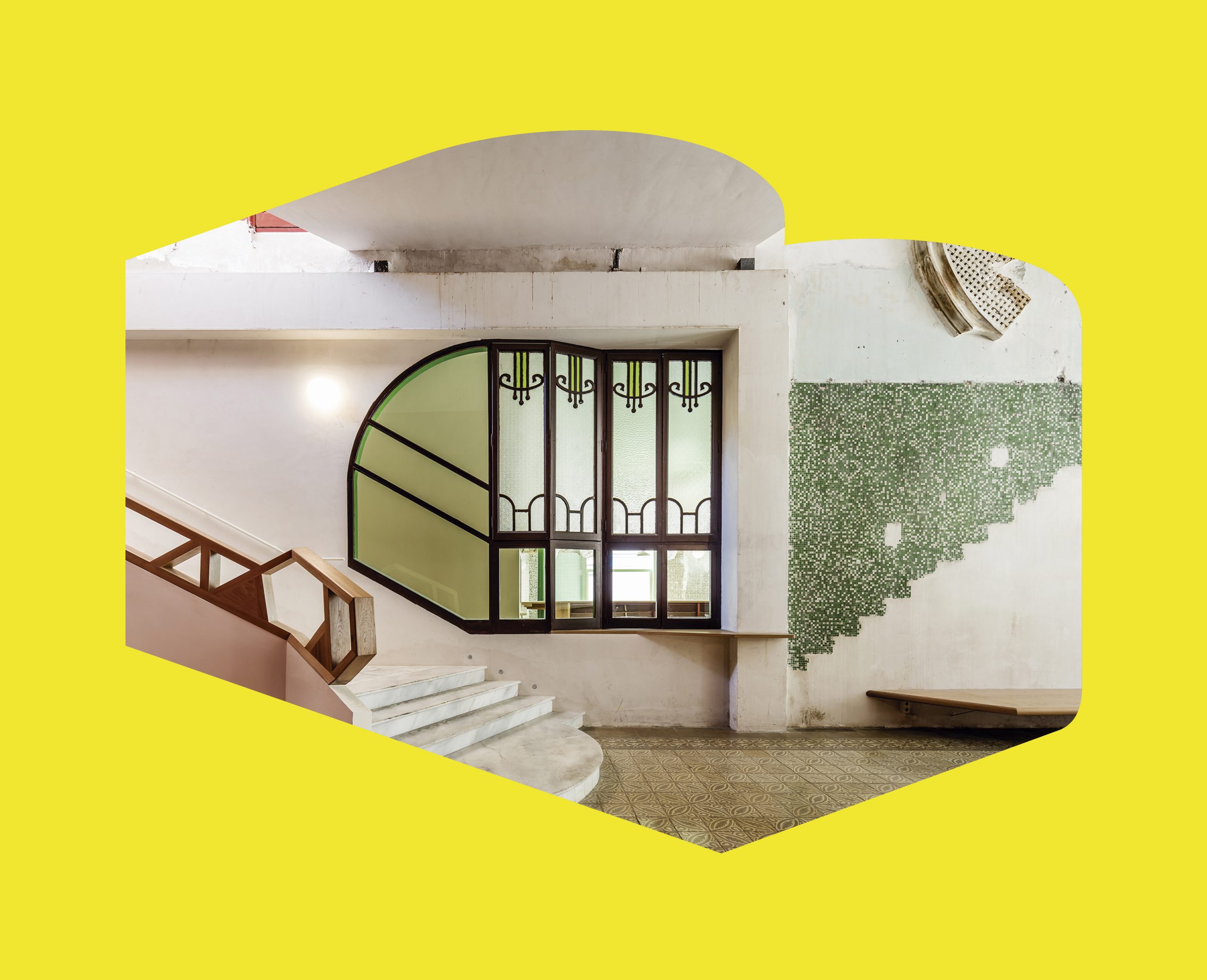
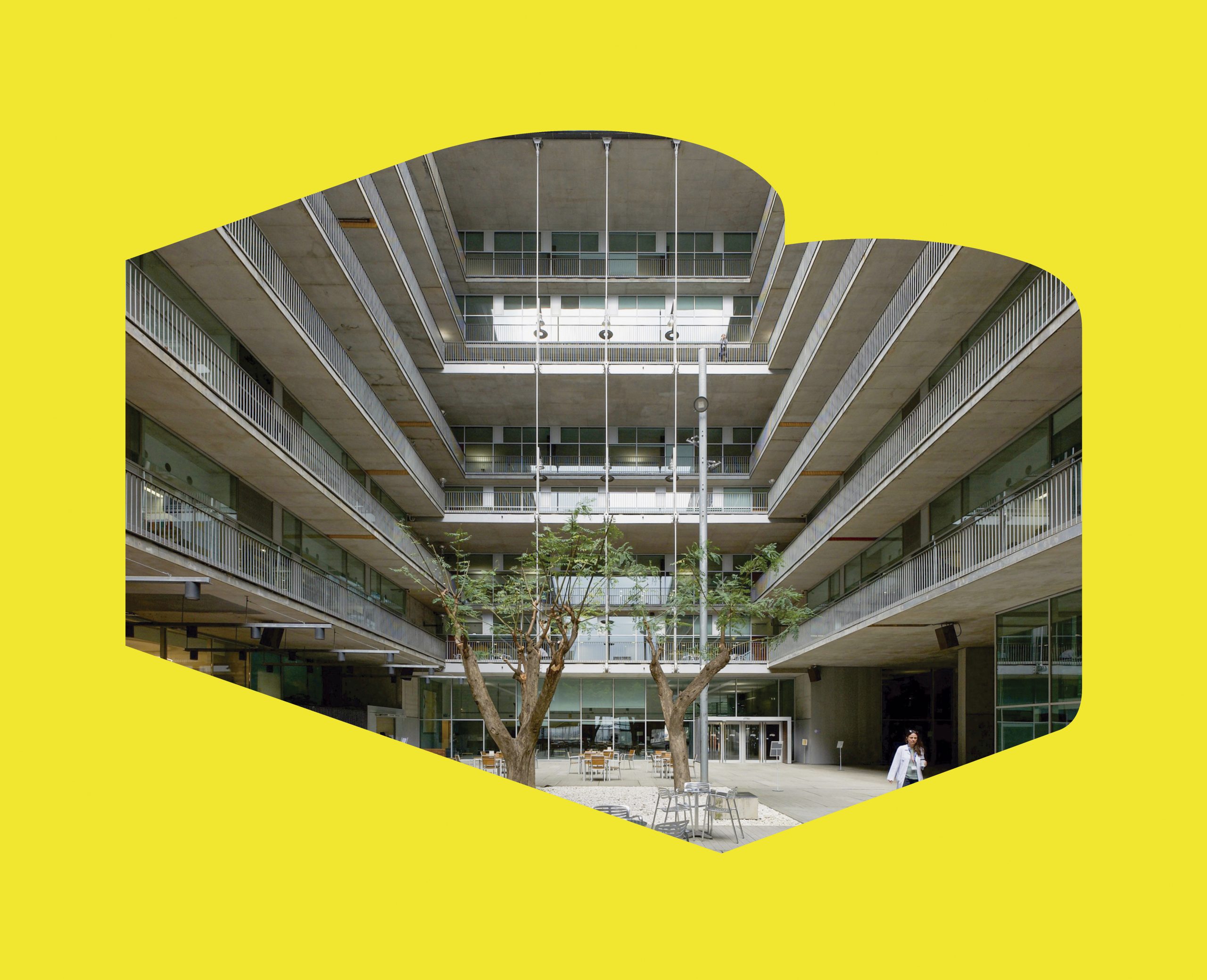
The proposals of the firm formed by Guillermo Giráldez, Pedro López Íñigo and Xavier Subías are part of the more internationalist strand of the modern architectural movement, which, at the time they graduated as architects in the early 1950s, was beginning to show signs of exhaustion with the critical emergence of Team X at the CIAM (International Congress of Modern Architecture) in 1953. However, in Spain at the time, where the teaching and construction of architecture was based on fully academic and classicist proposals, the internationalism that this young Barcelona studio wanted to emulate was still groundbreaking.
This coincided with an opportunity that was out of reach for other contemporary architects interested in the direction of new architecture in Barcelona: in 1952, Pedro López Íñigo became municipal architect and in 1954 he joined the Municipal Housing Board, which he led from the outset. The work of the Franco administration, which at that time was beginning to open up economically with the 1959 National Stabilisation Plan, required alternative and rapidly constructed plans in order to quickly accommodate the migration from the countryside to the city, which was about to overwhelm Barcelona and lead to shanty towns on its outskirts.
López Iñigo’s position allowed his office to take charge of many of these preliminary studies and partial plans, which in turn led to the construction of some of his buildings. Influenced by the Interbau exhibition held in Berlin in 1957, where the great masters of the modern movement contributed new ideas in the field of housing and the city, Montbau was the first result as an autonomous neighbourhood created from scratch. In the following years, new examples were built in different locations around the city, where similar formulas continued to be applied, despite the doubts that were beginning to arise regarding neighbourhood creation, density and integration. The shadow of a dormitory town loomed over the classic, consolidated Cerdà grid.
At the same time, for the same reasons of migration and the demographic boom, educational centres and universities had to increase their capacity with extensions or new buildings, and even entire university campuses. In these cases, both the functionalist proposals and their constructive, aesthetic and economic results fitted in with a society that wanted to leave behind the hardships of the dictatorship. However, the long-awaited arrival of democracy meant, due to the change in the rules of the game—and, therefore, also of its main players—a decline in relevant commissions and the slow decline of the influence of this studio, which, in just twenty years, had designed entire neighbourhoods.