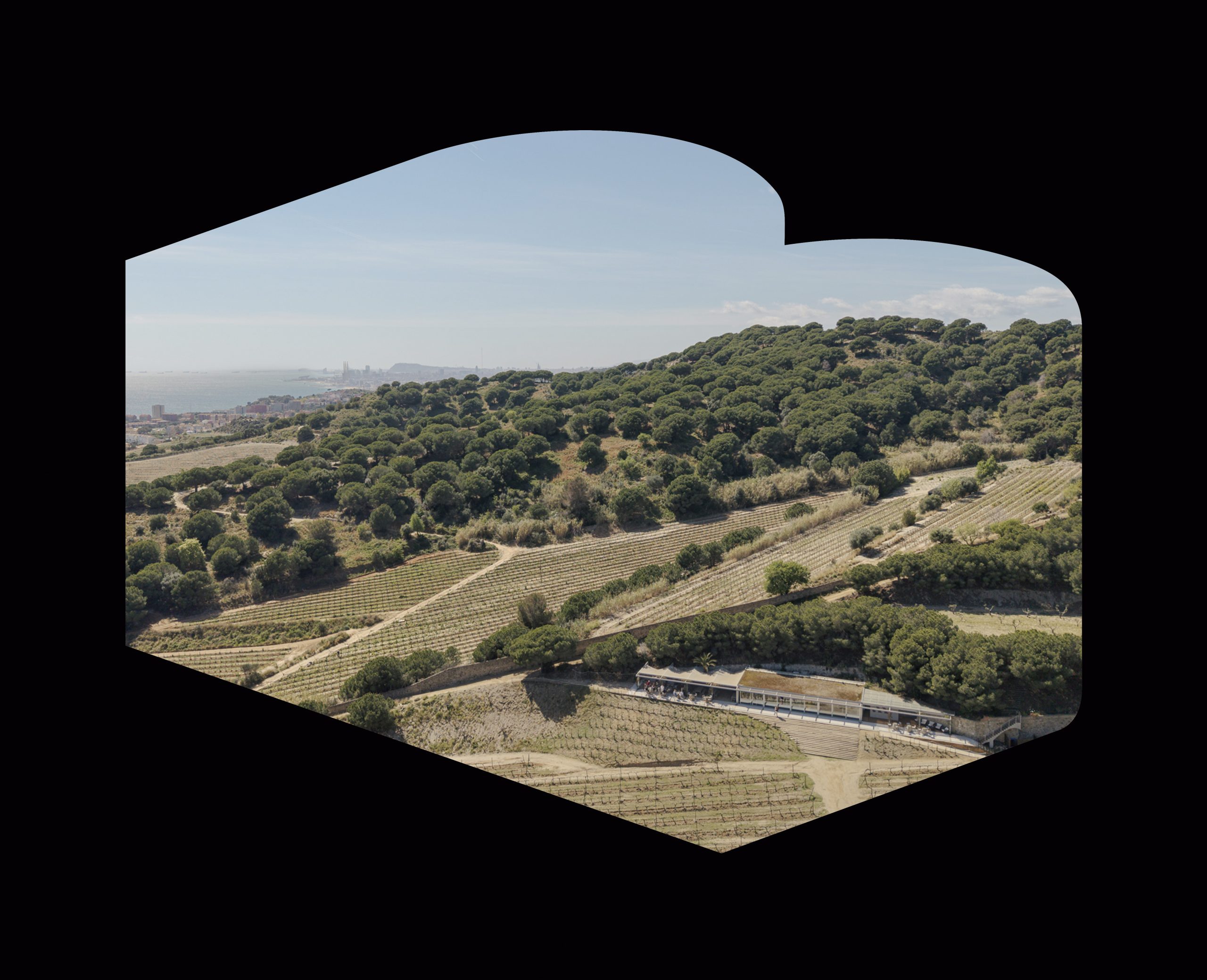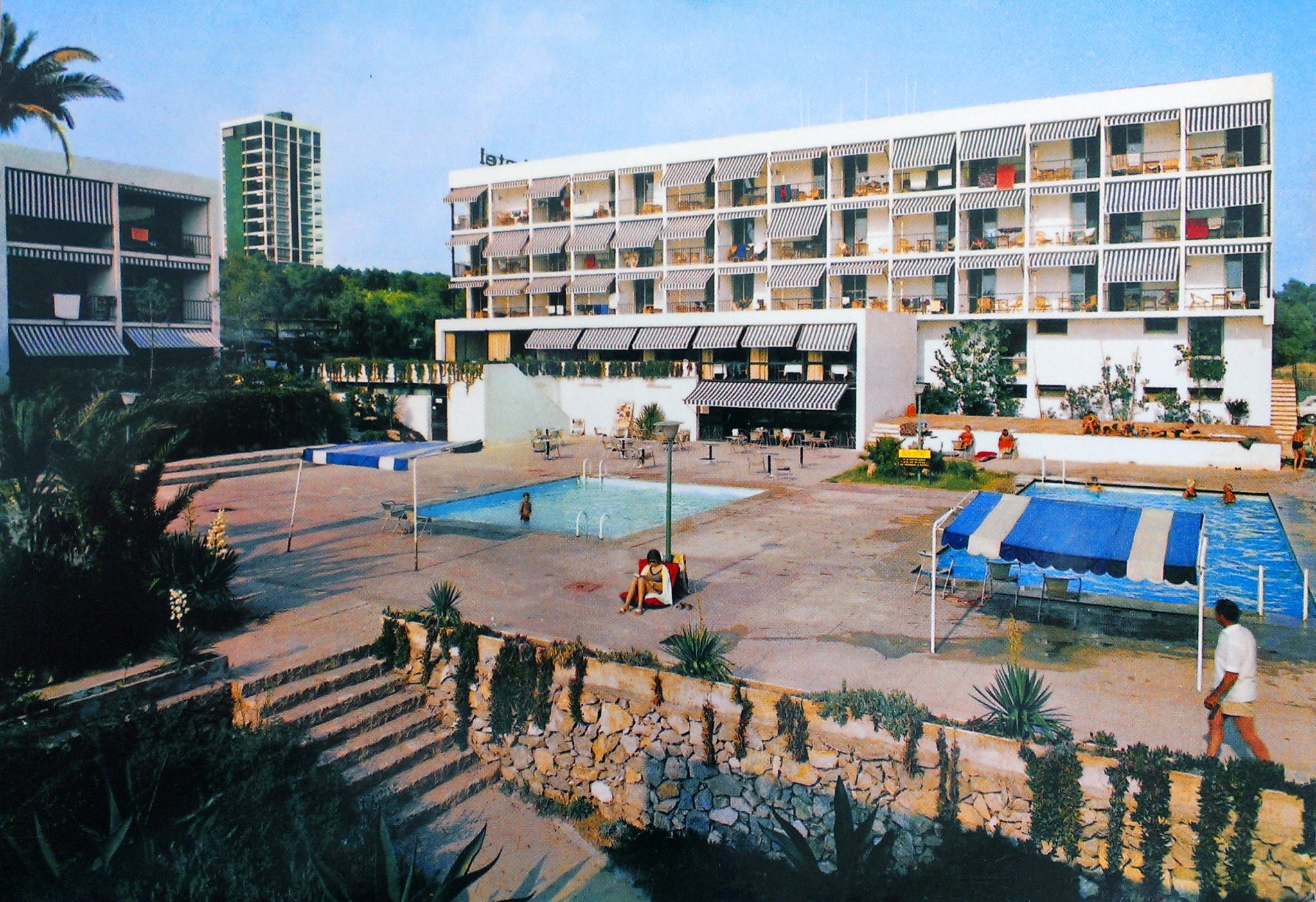
The itinerary proposes a tour of some of the works by Antoni Bonet and Josep Puig Torné in the Cap Salou residential development, built between 1960 and 1964. Coinciding with the early years of sun and beach tourism and the opening of the coastal road linking the Laboral University of Tarragona (1951) with Salou, this development is located on the south-western slope of this rocky promontory, which juts out into the sea with steep headlands and sheltered coves. The Falconera Point lighthouse was the only pre-existing building in a landscape of pine forests, dry crops and a few roads.
Bonet had opened an office in Barcelona in 1959 and was collaborating with Puig Torné on the Politur tourist complex in Platja d’Aro (Girona). These were very prolific years, during which they were able to work on a ‘new range of forms, qualities, concepts and environments that were totally new, without restrictions, preconceived ideas or imitations’.
In Cap Salou, the topography, orientation and views would determine the layout of the development and the arrangement of the buildings. Unlike Punta Ballena (Uruguay, 1945-1948), here the large rock will determine an organic street layout, with curved branches that intersect at open angles and end in dead ends: parking pockets and viewpoints. A double circuit of paths and stairs will provide pedestrian access to the plots.
The traditional language of agricultural buildings is evident in the low stone walls and platforms built into the rock, on which the abstract language of the buildings is arranged: white walls, overhangs, terraces, large glass openings, shutters. The buildings, formed by aggregation, are staggered and fragmented to adapt to the terrain, with heights that do not exceed the tops of the pine trees. The aim was to ‘go unnoticed’ and only the Torre Italia, at the highest and flattest point of the development, stands out as a visual landmark.
Car access does not interfere with the privacy of the common areas —patios, arcades, passageways, and swimming pools— which lead us to the domestic staircase, nor with the views from the homes, which are open and airy, overlooking the Mediterranean horizon. Different types of homes, typical of holiday destinations, are combined within the same complex. Order is provided by the modular grid, the systematisation of the construction elements and the use of regular geometry, including triangles, which reproduce the shapes of the landscape. The work of the two architects includes a project for an oratory in Nostra Senyora del Mar, in Cala Crancs, where the civic centre of the development was to be located.
 16
16