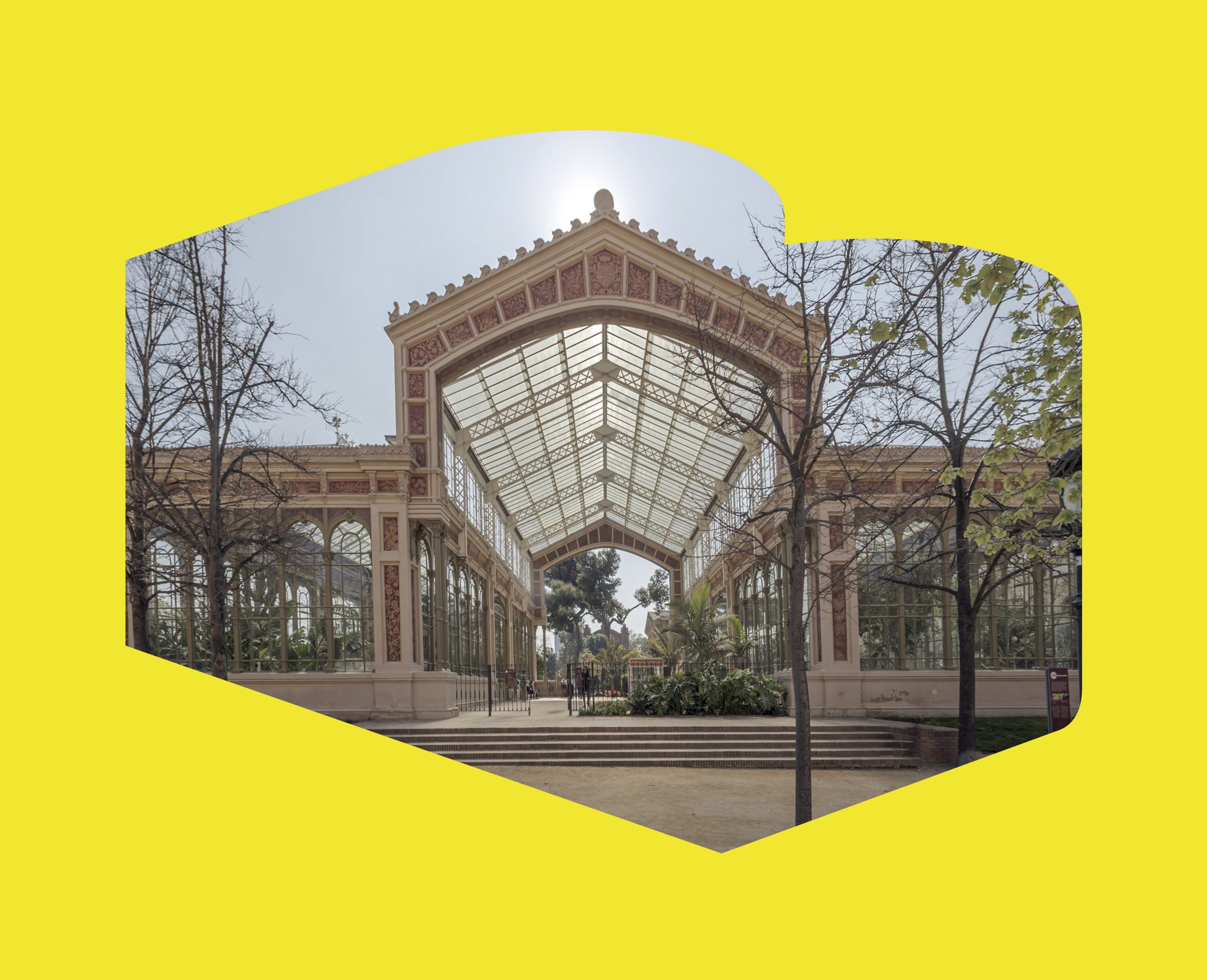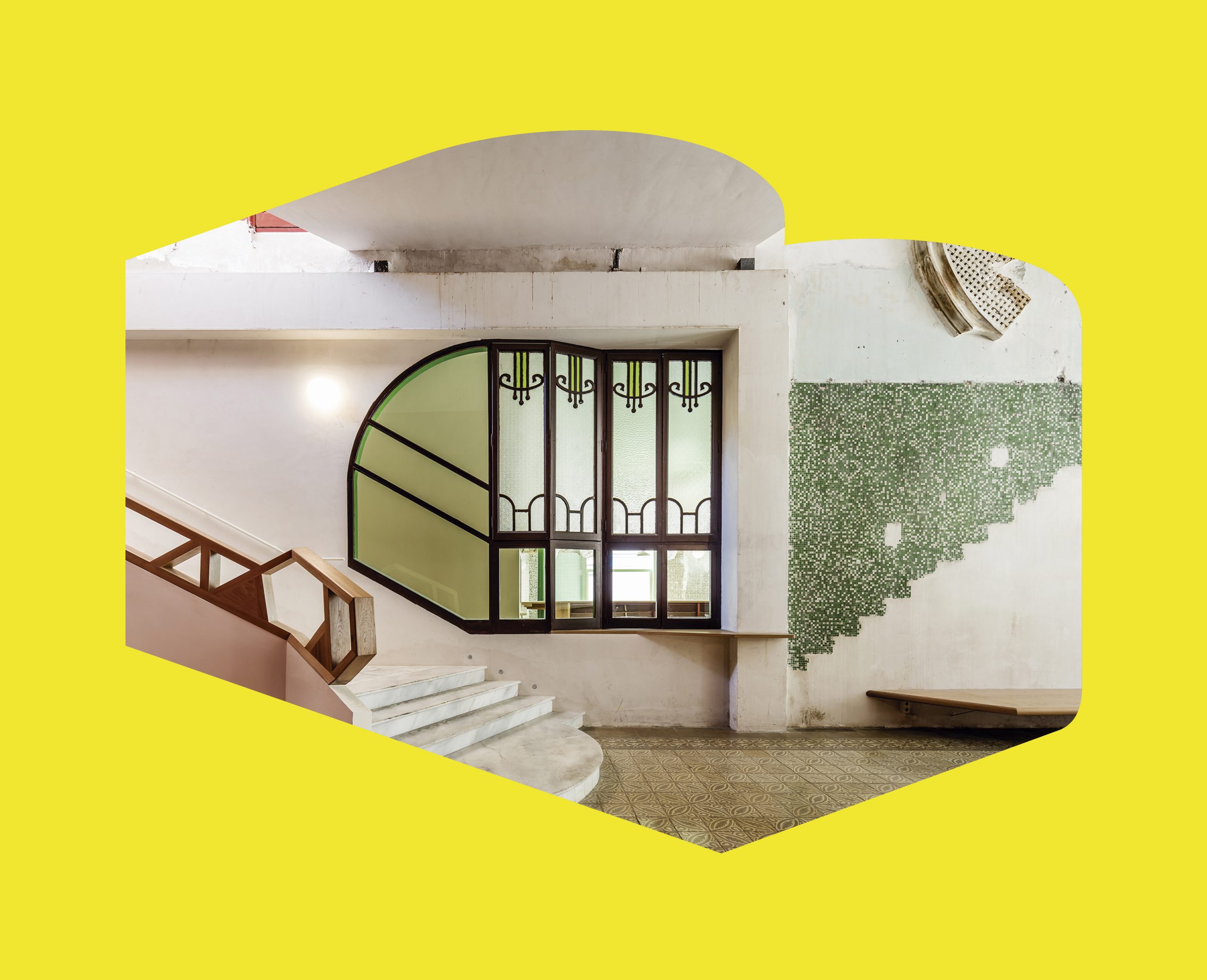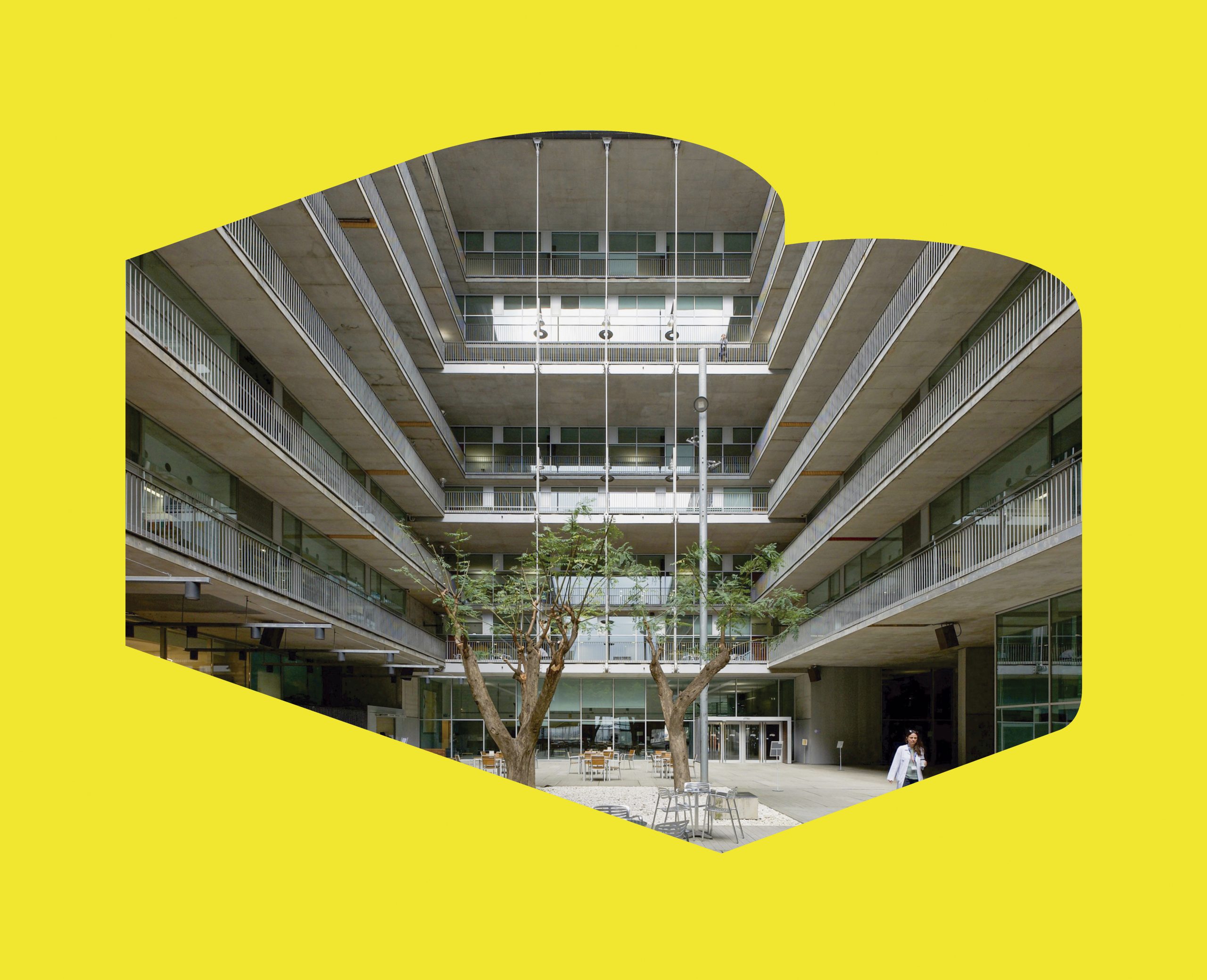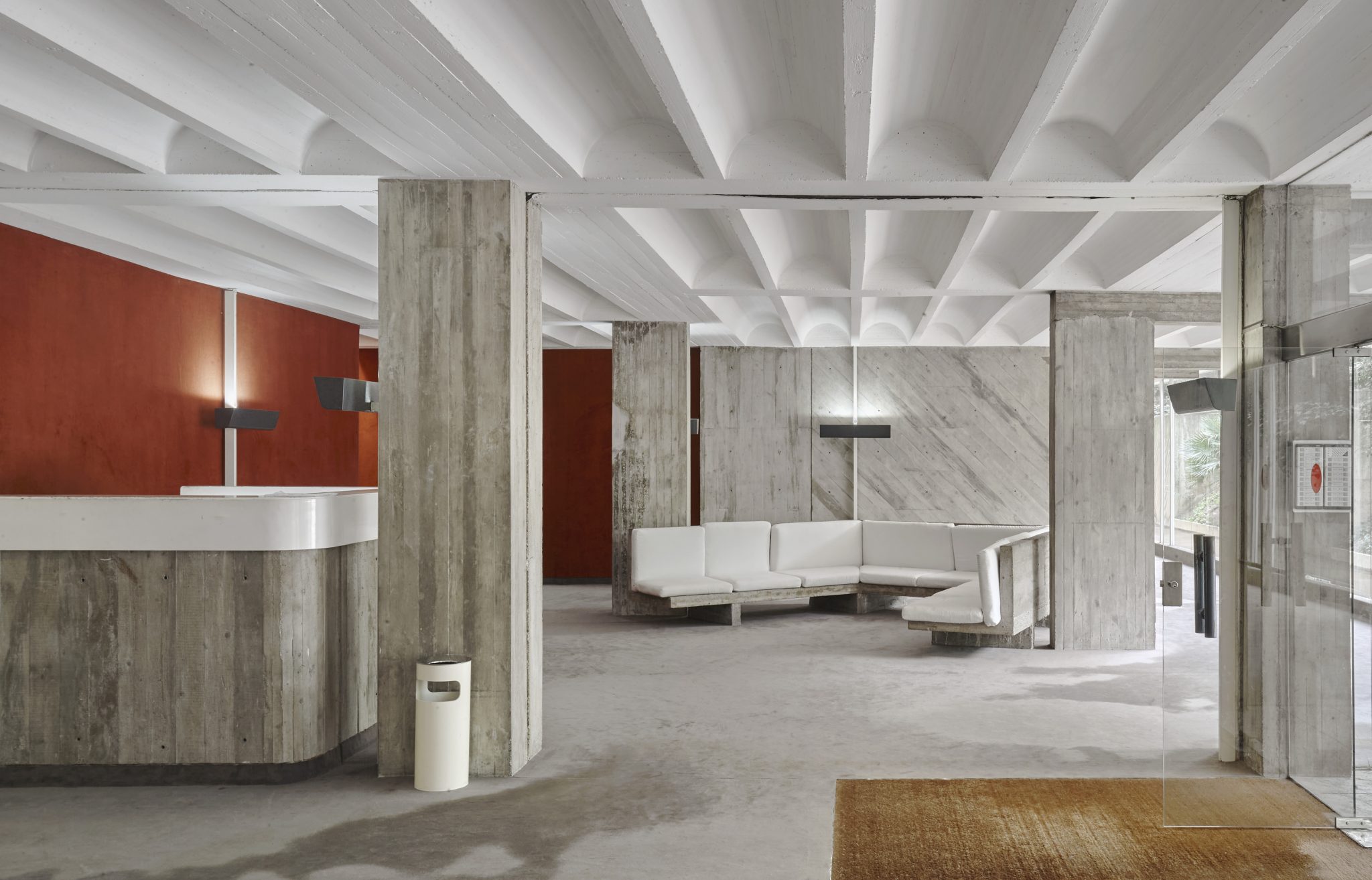
On this itinerary we explore a Barcelona through the lens of the entrance spaces of modern collective housing buildings: spaces which, beyond their function of facilitating and regulating access, represent their inhabitants through the paradigms of their time. As many of these entrances are well preserved, they act as a showcase containing a frozen modernity for the visitor, having been designed to engage in dialogue with the street.
These spaces underwent a process of sub-typological transition and reinvention, the origins and meaning of which can be found in earlier historical architecture: the entrances of old residential buildings —deep and generously proportioned in height (at least enough for a horse and carriage), and usually with a courtyard at the back— were taken up and reinterpreted by Barcelona’s Catalan Art Nouveau. Horses and carriages gradually disappeared as hygienist modernity arrived, resizing ground floors with the pedestrian and the automobile as new points of reference.
The architects who designed the most representative examples of collective housing in Barcelona for this new private, bourgeois and industrial ideal seem to have been responding to the following question: how could the inherited representational status of the traditional building be reformulated within the new modern scenario? They did so by employing resources such as ornamentation —drawing on expressions of industrial tectonics and applied-art geometries— while also hierarchically preserving the spatial generosity of the ground floor, through devices such as double-height spaces or fully open, through-plans. They also articulated new relationships with the exterior that responded to contemporary programmes, with entrances that staged this moment, anticipating the experience awaiting the visitor in the intermediate space between street and interior.
These entrances and waiting areas often display an appearance of domesticity —almost like a diorama— as if they were another dwelling, complete with period furniture. They generate a kind of private room open to the street: a transitional filter that welcomes and holds guests —and strangers alike— in a limbo where the communal realm ends and private life begins.
 10
10
 2
2