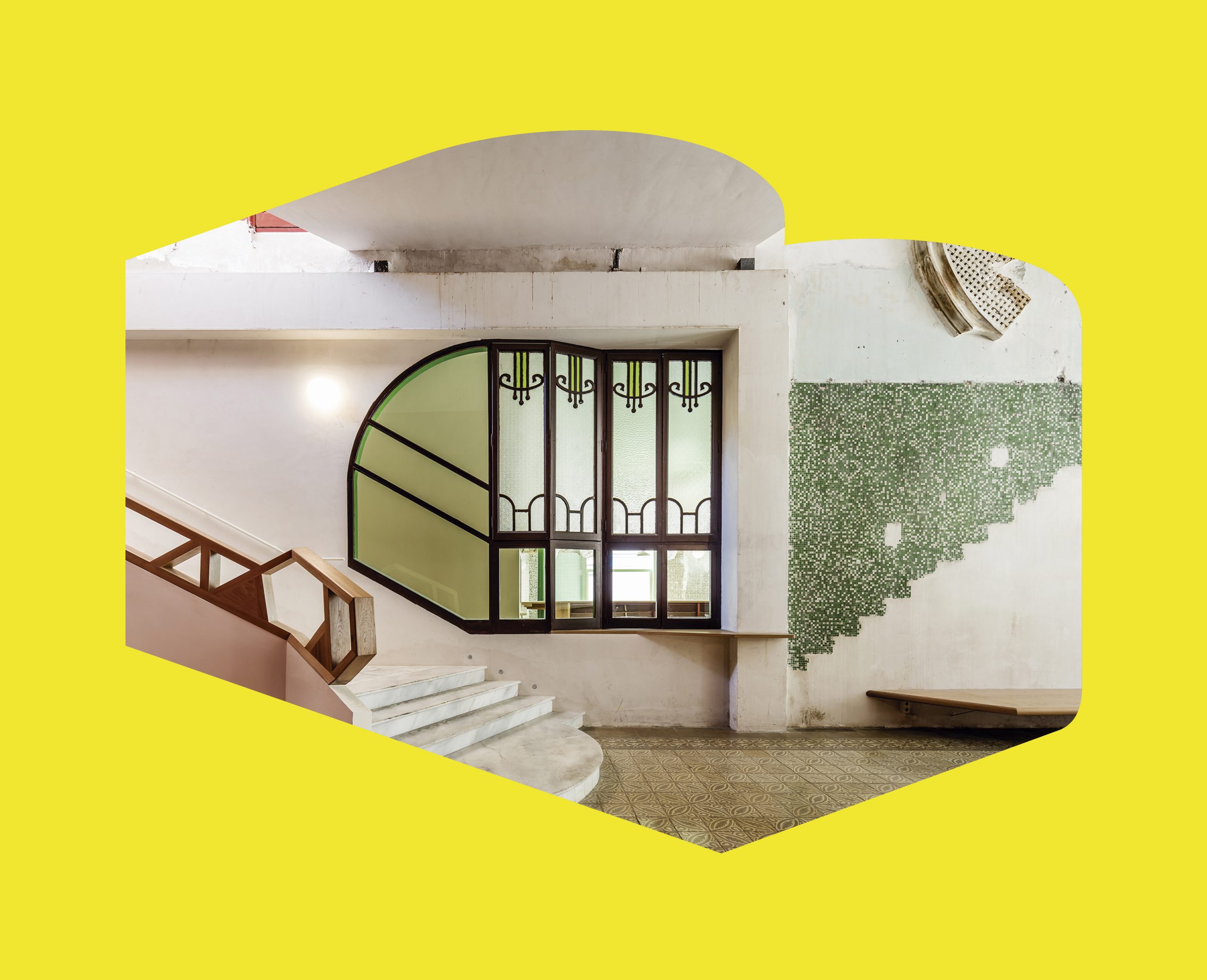
The neighbourhoods of houses and gardens are one of the unique features of Olot‘s urban fabric. Low density has given rise to three distinctive areas that respond to successive periods of growth in the city, differentiated within a limited period of fifty years in the 20th century. A stroll through its streets tells us part of the local and global history, as well as the evolution of a country in political and social transition, from the Mancomunitat de Catalunya to the Francoist dictatorship. Its appeal lies in the reflection of the period in which they were conceived: the urban atmosphere and architecture retain the essence of what they were originally. The passage of time, a fundamental factor in the morphological construction of a city, has not significantly altered its character.
Three city staircases – the neighbourhood, the street and the house – are designed in a coordinated manner to respond to a model of society and are defined by urban parameters and architectural trends characteristic of the thinking of each era. The urban fabric, the plot layout, the road layout, the morphology of the streets, the building typology and the architectural language form part of the comparison between the Eixample Malagrida (1916), the Sant Pere Màrtir housing group (1950-1958) and the first phases of the Pla de Dalt.
The Eixample Malagrida, designed by Joan Roca i Pinet in 1916, modified by Josep Esteve in 1925 and built according to the ideas of the developer and Indiano Manuel Malagrida, envisaged growth with two hemispheres on either side of the Fluvià. It covered the same area as the city at that time and was intended to become the new centre. The radial and annular geometry of the urban layout fits surprisingly well with the meandering river. The northern hemisphere was built according to the project, with wide, tree-lined boulevards and Noucentista villas with large gardens for wealthy families.
Forty years later, in response to the needs of an impoverished post-war population, Joaquim Maria Masramon and Ignasi Bosch designed the Sant Pere Màrtir housing complex, popularly known as ‘the cheap houses’. It is a garden city promoted by the Obra Sindical de la Llar (Trade Union Housing Association), characterised by white houses with Arabic-style hipped roofs and retaining walls made of Banyoles stone. It consists of 332 dwellings of 25 different types, detached, semi-detached or terraced, spread out on the slopes of the Montolivet volcano via stairways, passageways and winding roads, all designed as a unified whole with special care taken to adapt to the topography of the site. The church, located at an elevated point in the neighbourhood, presides over the porticoed square on one side and the main staircase on the other.
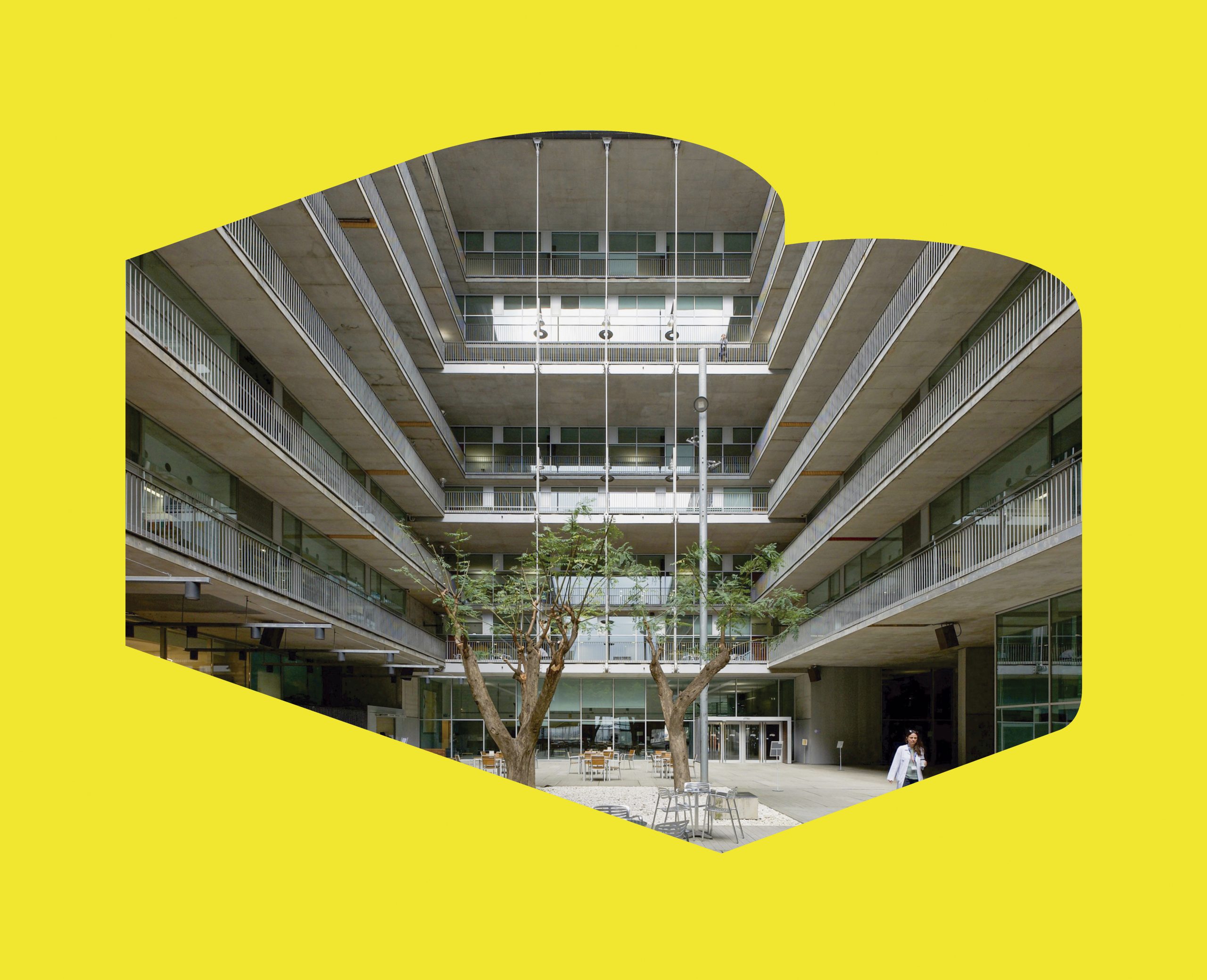
And in Pla de Dalt, Francesc Vayreda designed the third phase of this story in the 1960s to respond to a new middle class in Olot. A member of Grupo R, influenced by the precepts of the modern movement and Team X, he structured the neighbourhood around two infrastructures that act as axes: the winding route of the Riudaura road and the tree-lined avenue of Mas Subiràs, with a hierarchy of roads and a gradation of privacy in the public space, row by row. The latest additions to the neighbourhood include the Institut La Garrotxa and the new Hospital d’Olot i Comarcal de la Garrotxa.
 9
9