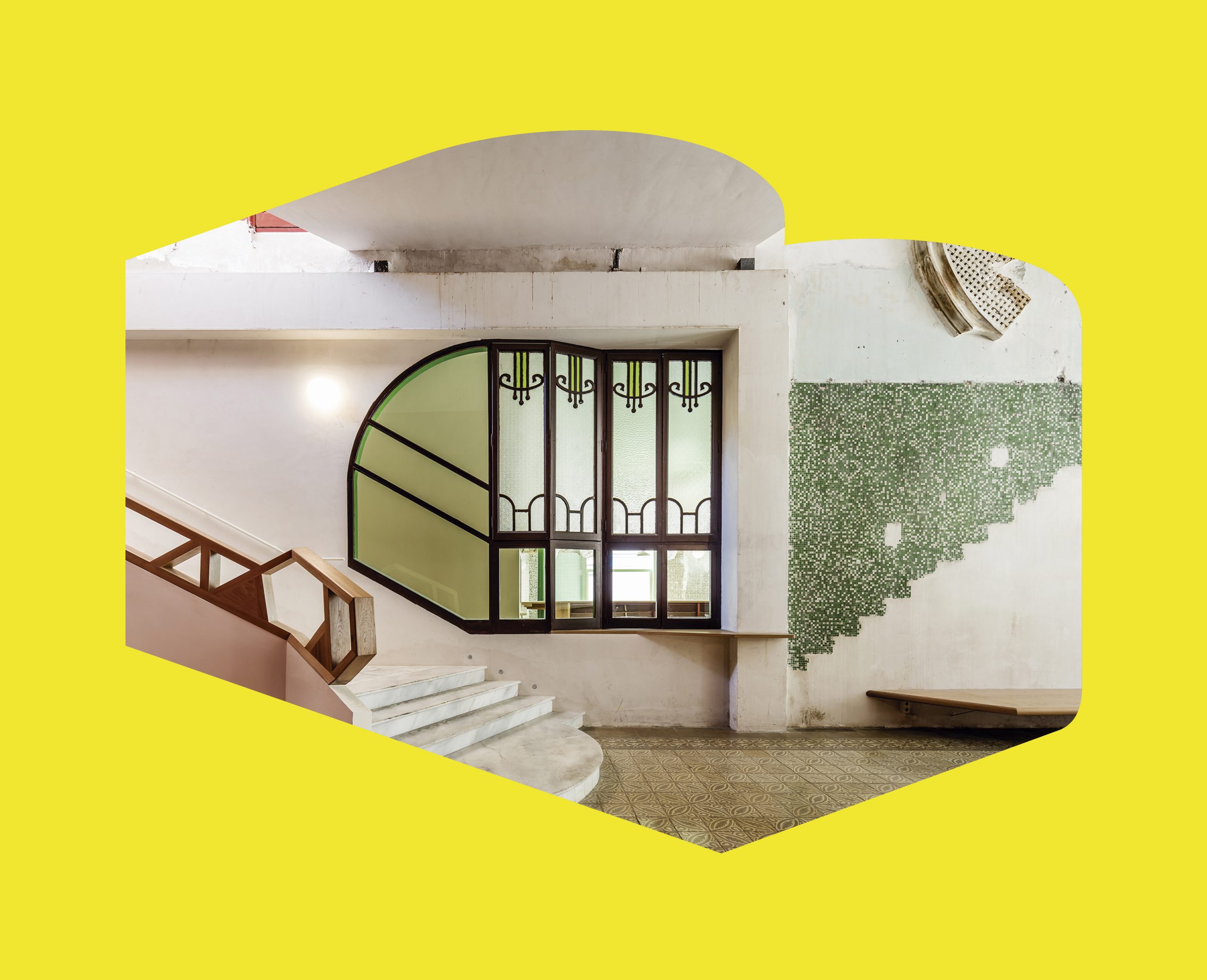
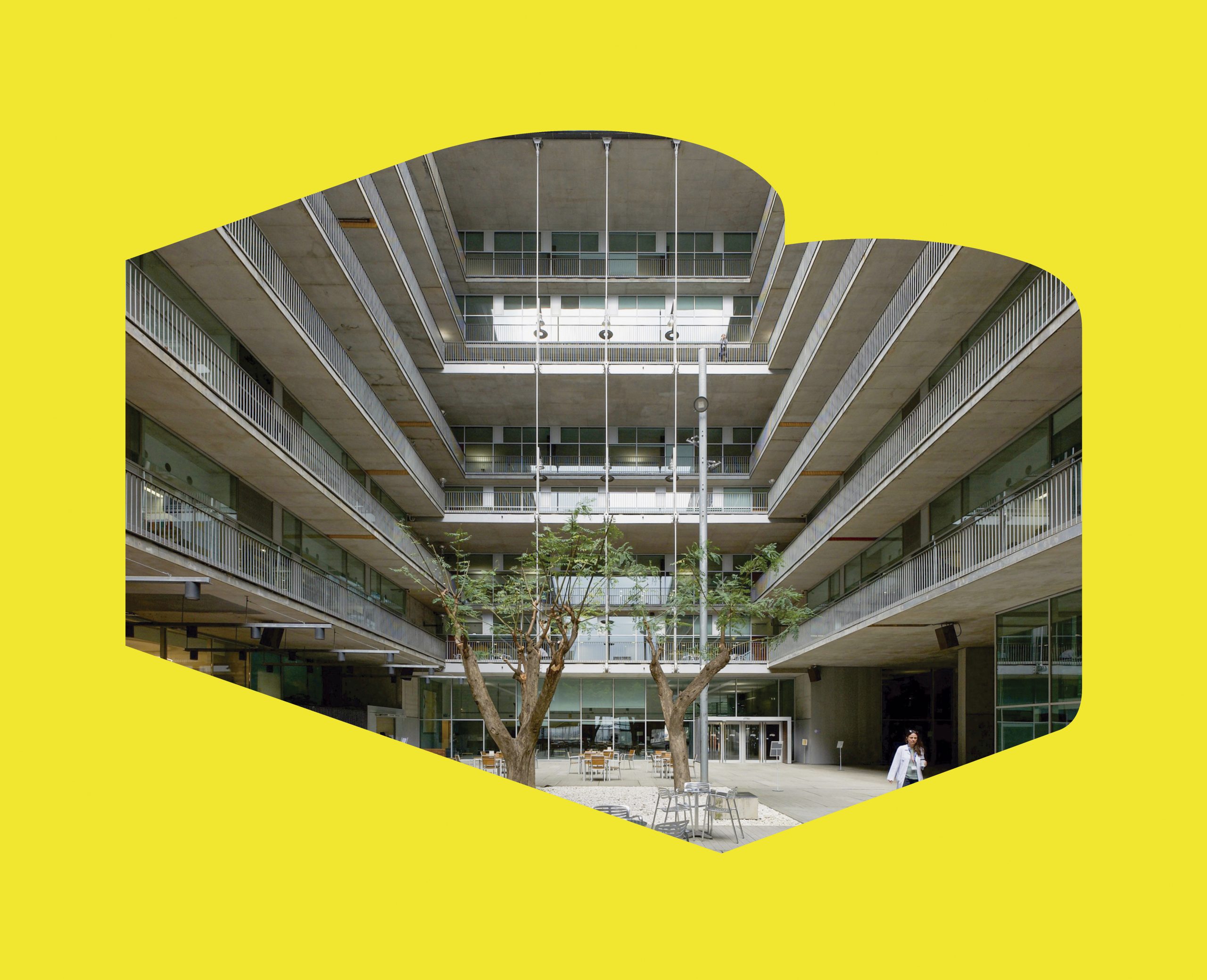
Although deconstruction was a fairly popular term and style throughout the 1980s and 1990s in the field of architecture, it is difficult to find examples in Catalonia, given its theoretical ambiguity. For some, it was an attempt to translate the precepts of French post-structuralism into physical space; for others, it was an attempt to update avant-garde movements such as Dadaism or Russian constructivism. There are also those who interpreted it literally, as synonymous with dismantling or structural imbalance. For all these reasons, it is difficult to define deconstructivism as a unified or coherent movement. Nevertheless, we will outline a route, albeit approximate, that follows the coastline of Barcelona, Sant Adrià del Besòs and Badalona, areas that were urbanised at the time this style was spreading.
The starting point for deconstructivist Barcelona could only be Gehry‘s ‘Pez’, the only architect included in the exhibition ‘Deconstructivist Architecture’ —held at the MoMA in New York in 1988— who has work in Barcelona. Had it been built, the Fontana Mix would be right next to it. This was the project by Yago Conde and Bea Goller for the Plaça dels Voluntaris Olímpics, which was intended to pay tribute to the musical score of John Cage’s work of the same name. Conde worked in the studio of Peter Eisenman, another of the architects included in the aforementioned exhibition at the MoMA. Also under Eisenman’s tutelage, Antonio Sanmartín—who, like Conde, worked in his studio—made his deconstructivist imagination felt in the Casacuberta library in Badalona, which he would build years later together with Elena Cánovas.
Returning to the Olympic Village, the pergolas on Avinguda d’Icària, designed by Enric Miralles and Carme Pinós, serve as an irrational counterpoint to the Cartesian ensemble of buildings in the new neighbourhood. The project generated some opposition among the architects of nearby buildings, which led to a rethinking of the original design. This desire for formal confrontation with the environment was also evident in artists linked to deconstruction, such as Robert Smithson, Gordon Matta-Clark and Richard Serra.
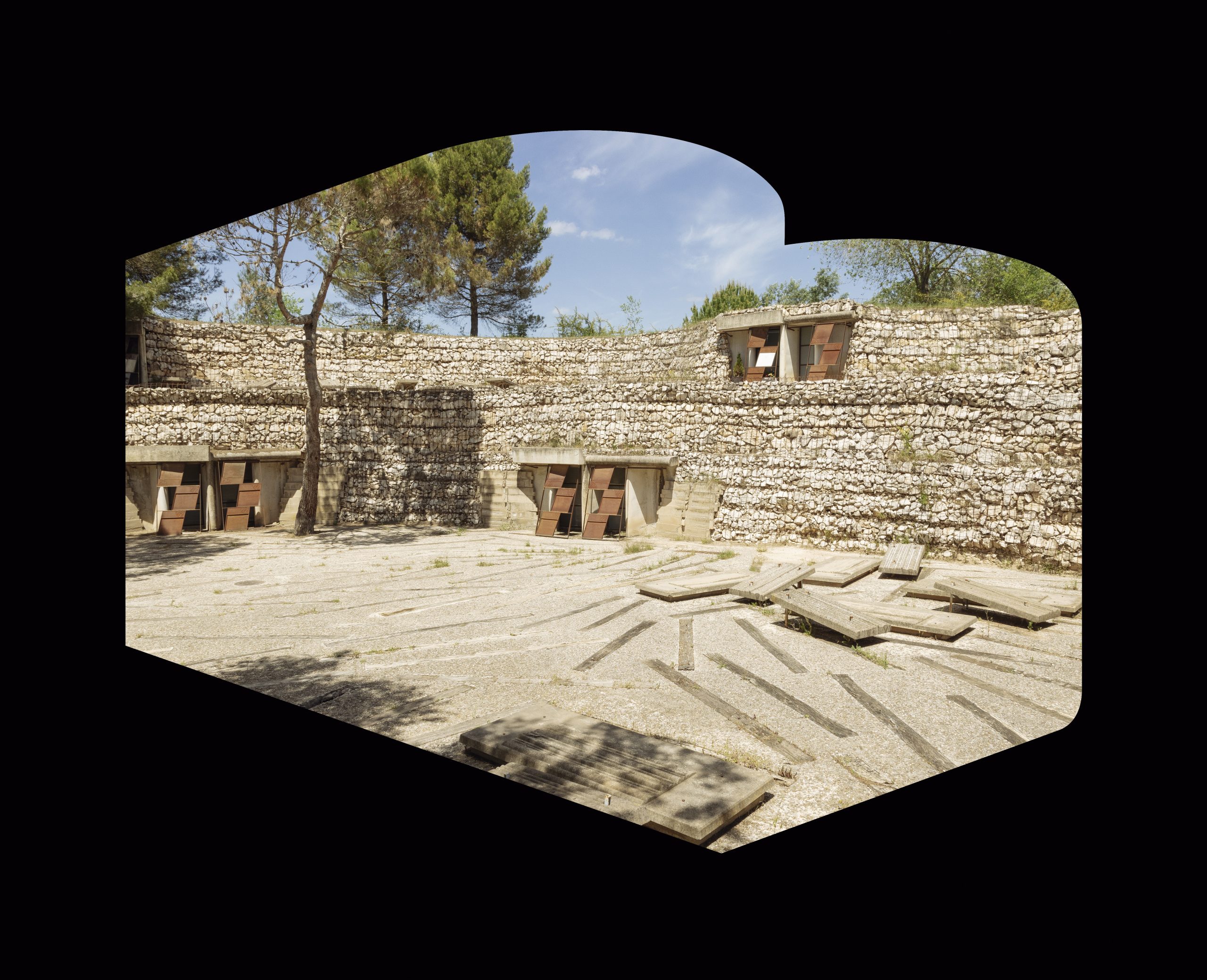
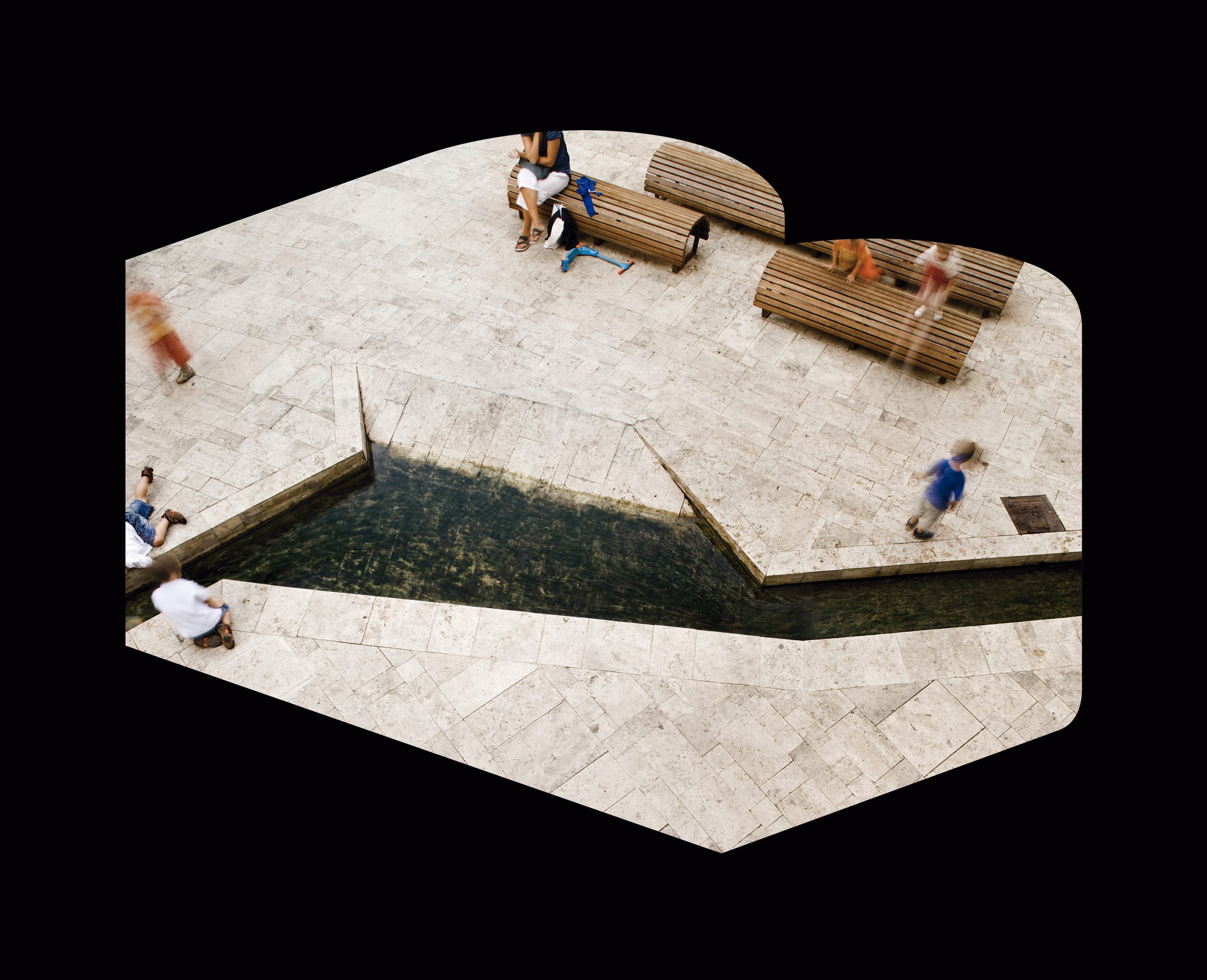
El parc del Besòs, projectat per Albert Viaplana i Helio Piñón, n’és un altre referent. Piñón va ser un dels primers difusors de Peter Eisenman al país, amb llibres com Arquitectura de las neovanguardias o com a editor de la revista Arquitecturas Bis. Aquest projecte destaca especialment perquè recull alguns dels debats al voltant de l’espai públic que van tenir lloc a principi dels anys vuitanta arran de concursos com el del parc de la Villette a París. Una de les característiques principals d’aquest parc, així com del veí cementiri de Sant Pere, és la manera més o menys irònica de relacionar-se amb el context a través de la introducció d’elements irracionals, com uns dispensadors d’aigua grocs o el traç del quadre El naixement del món de Joan Miró.
The Besòs Park, designed by Albert Viaplana and Helio Piñón, is another reference point. Piñón was one of the first promoters of Peter Eisenman in Spain, with books such as ‘Arquitectura de las neovanguardias’ (Architecture of the Neo-Avant-Garde) and as editor of the magazine Arquitecturas Bis. This project is particularly noteworthy because it reflects some of the debates on public space that took place in the early 1980s in the wake of competitions such as that for the Parc de la Villette in Paris. One of the main characteristics of this park, as well as the neighbouring Sant Pere cemetery, is the somewhat ironic way in which it relates to its context through the introduction of irrational elements, such as yellow water dispensers or the outline of Joan Miró’s painting ‘The Birth of the World’.
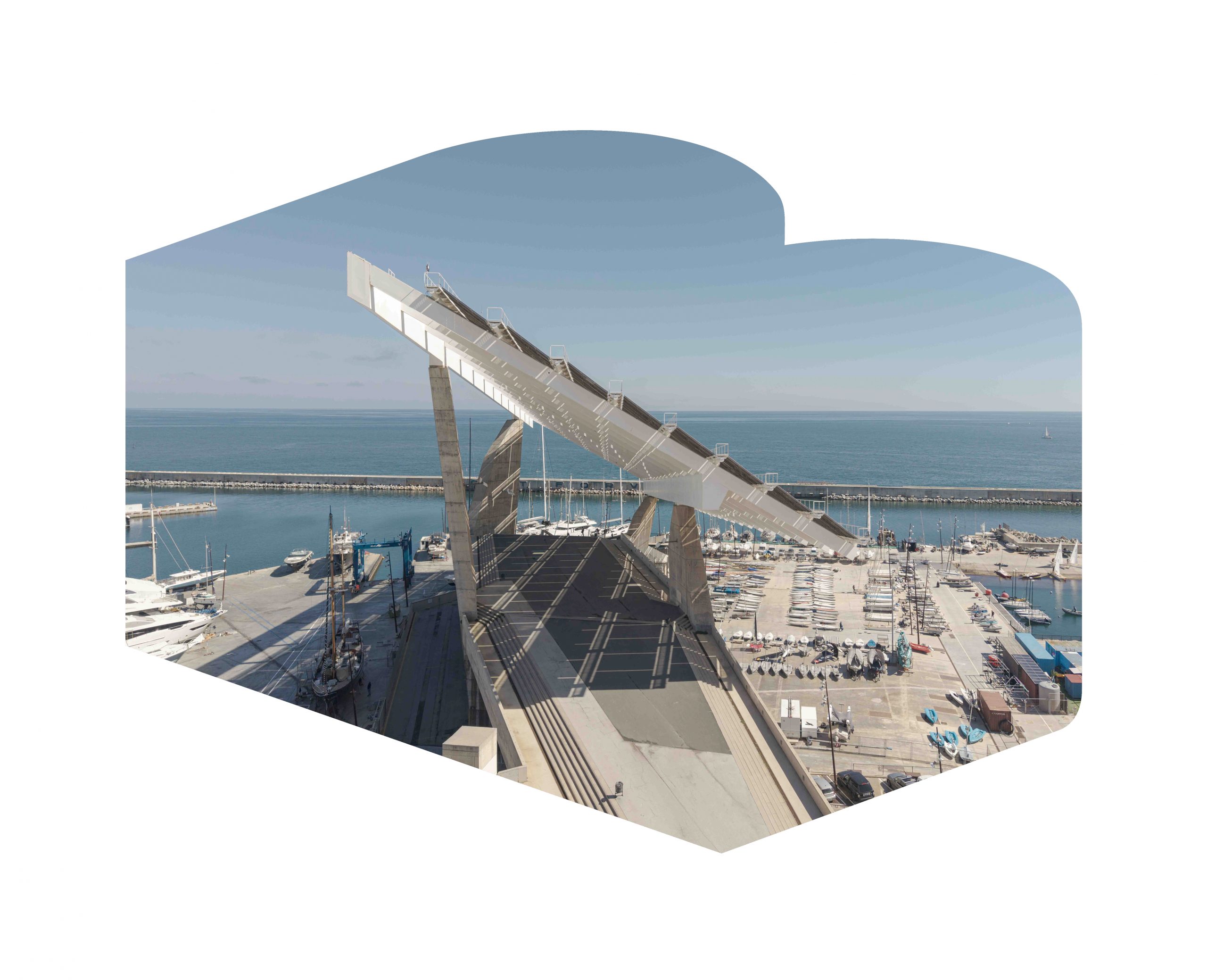
As mentioned earlier, one of the characteristics of deconstruction was the interest in pushing structures to their limits. Structural calculation and engineering firms such as BOMA and Esteyco worked with architects to calculate the projects; among these, the photovoltaic pergola by José Antonio Martínez Lapeña and Elías Torres at the Fòrum stands out. Although it was built later during the deconstructivist boom, it has an undeniable tectonic air; today, its silhouette is already part of the recognisable skyline of the new metropolitan coastline.
 1
1