Education and the dissemination of knowledge were fundamental pillars of the action plan of the newly established Commonwealth of Catalonia (‘Mancomunitat’). In 1914, literacy rates in Spain were very low compared with those of the rest of Europe; teaching methods were rigid and based almost exclusively on lectures and rote learning, and Spanish was the sole language of instruction. All this stood in stark contrast to the aspirations of an institution which, although endowed with largely symbolic executive power, pursued more optimistic, European-oriented and open ideals, championed by figures such as Enric Prat de la Riba and Eugeni d’Ors. The Mancomunitat sought to build upon the political and cultural Catalanism forged from the second half of the 19th century to the early 20th, driven by a generation of intellectuals and a local bourgeoisie committed to a project of national renewal.
The institution was founded with the intention of blurring, within Catalonia, the Spanish provincial map imposed in 1833 across the entire state, whereby each province answered directly to central government through the provincial councils. Bringing together the four Catalan provincial councils under a single body represented a major step forward, symbolising not only administrative but also cultural unity; implementing this on the ground was an enormous challenge. In the field of education, and with the aim of weaving together the territory, four schools were opened in rural areas —one per province— with Catalan as the language of instruction: Sant Llorenç Savall (Barcelona), Palau-saverdera (Girona), La Masó (Tarragona) and els Torms (Lleida) were chosen for this pilot project. Although still modest in scope, these tentative foundations would become the seed of the future Catalan school system.
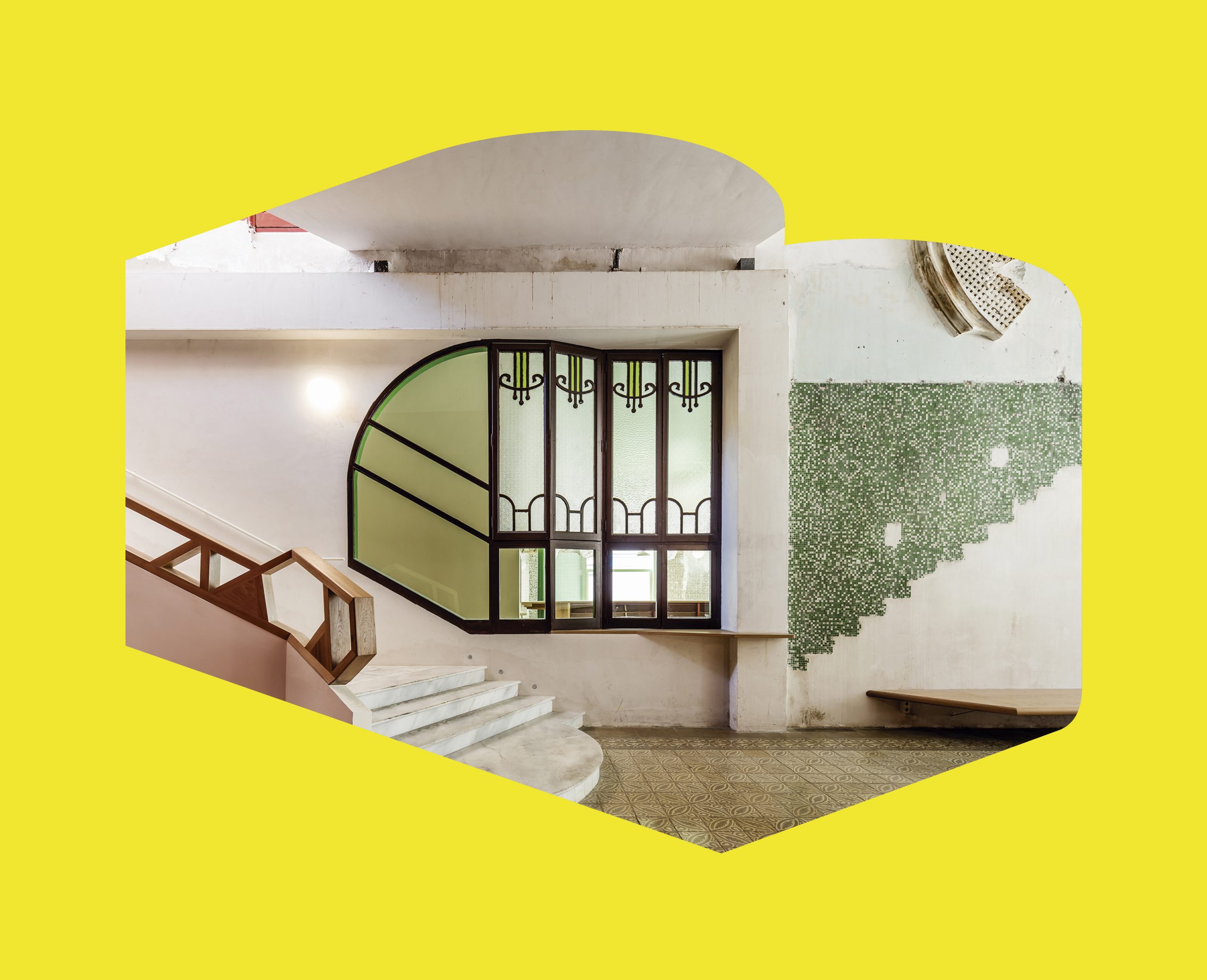
At the same time, and in the service of society as a whole, a network of public libraries was created —stocked with titles selected by the Mancomunitat itself— housed in newly constructed buildings which, like the schools, were required to embody Noucentista ideals. This was reflected in their architecture, inspired by the Renaissance, with clear lines, restrained ornamentation and classical orders. Ideals, therefore, were also transmitted through the very buildings that were meant to represent them.
With the dictatorship of Primo de Rivera, the Mancomunitat was dissolved in 1923–1924, but its spirit did not disappear. With the advent of the Second Spanish Republic, these initial steps multiplied exponentially, and the proliferation of educational and cultural centres became both notable and significant. Yet it is these early attempts, and their small-scale architecture, that this route seeks to highlight—a fragile heritage well worth reclaiming.